0%

Choosing the best Commercial Lat Pulldown Machines from China requires more than comparing prices. Buyers must evaluate construction, biomechanics, supplier reliability, and long-term service. A polished product page can hide important details.

This guide examines the features that matter in real training environments. We consider frame steel, cable routing, pulley bearings, seat adjustment, thigh pads, and weight-stack accuracy. A machine may look powerful, yet feel unstable during heavy repetitions. That difference becomes obvious in a busy gym.

Supplier experience also deserves close attention. Ask for factory photographs, production records, material specifications, and test reports. Confirm whether the quoted price includes packaging, spare cables, installation tools, and shipping protection. Small omissions can create expensive delays.

Check the machine’s dimensions carefully. Measure doorways, elevator capacity, ceiling height, and available training space before ordering. A 2.1-meter frame may fit a showroom but fail at the delivery entrance. It happens.

Reliable manufacturers should explain warranty coverage clearly. Request replacement-part timelines and written support terms. Independent inspections can verify weld quality, coating thickness, alignment, and smooth resistance. These checks are especially valuable for first-time importers.

No single model suits every facility. A hotel gym may prioritize compact dimensions, while a commercial fitness club needs higher durability and faster user adjustments. Some buyers focus too heavily on appearance. That is understandable, but not always wise.

By comparing verified specifications, factory capability, user feedback, and total landed cost, buyers can make a more defensible decision. This China buying guide aims to reduce uncertainty without promising perfection. Every supplier deserves careful questioning.
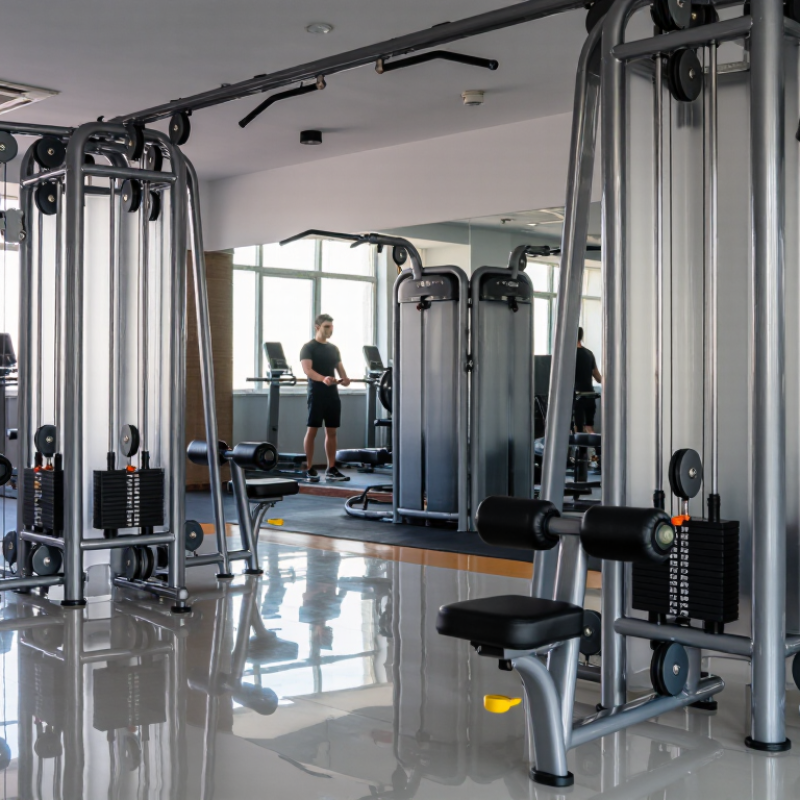
China Best Commercial Lat Pulldown Machines Buyers Guide?

What Defines a Commercial-Grade Lat Pulldown Machine?

A commercial-grade lat pulldown machine must survive repeated, unsupervised use. It is not defined by a thick frame alone.

The 2024 HFA Global Report recorded 184 million fitness members worldwide, showing the demanding scale of modern gym operations. More users mean more cycles, adjustments, and maintenance pressure.

A reliable machine uses a rigid steel frame, sealed bearings, and a protected cable system. The pulley path should remain smooth when the stack is heavily loaded.

ASTM F2276 and F2277 identify stability, durability, and user protection as key fitness-equipment considerations. These standards do not create a universal “commercial-grade” label, however.

Buyers should inspect welds, guide rods, seat joints, and cable attachment points directly. Small gaps matter. Poor alignment can create noise, uneven resistance, and premature wear.

Tips: Ask for cycle-testing records, warranty terms, and replacement-part availability. Check the machine with a controlled pull, not a showroom tug.

A useful seat should adjust quickly and lock firmly. The thigh pad must hold different leg sizes without painful pressure. The weight stack should move quietly and stop securely.

ACSM’s 2024 Worldwide Survey kept strength training among major fitness trends, so demand is unlikely to remain light. Still, “heavy duty” marketing can be vague.

A machine may look industrial yet use weak hardware inside. That is where careful inspection beats attractive specifications.

How to Compare Key Features, Specifications, and Training Functions

Choosing a commercial lat pulldown machine requires more than checking its price. The Health & Fitness Association’s 2024 Global Report recorded about 184 million fitness members across 66 markets in 2023. That scale increases demand for durable, adaptable strength equipment. In practice, inspect the frame welds, cable routing, seat stability, and finish. A wide base should resist movement when users pull heavily. It should not wobble.

Compare specifications with training goals. Check the weight stack, pulley ratio, cable travel, and adjustment range. A 100-kilogram stack may feel different with a two-to-one pulley system. Ask for the effective resistance, not only the printed stack weight. Seat height, thigh-pad adjustment, and handle options affect posture and exercise variety. Small gaps matter. Poor thigh support can make a strong pull feel unstable.

ACSM’s 2024 Worldwide Survey of Fitness Trends ranked traditional strength training fifth, showing continued demand for resistance equipment. For busy facilities, a selectorized stack can improve flow and reduce plate handling. A plate-loaded design may offer heavier progression, but it usually needs more supervision and floor space. Test the machine with different body sizes before buying. Some specifications look impressive on paper, yet the knee pad may pinch, the bar may swing, or the lowest setting may still feel too high. That is where buyer judgment matters.

China Best Commercial Lat Pulldown Machines Buyers Guide? - How to Compare Key Features, Specifications, and Training Functions

Comparison Dimension Compact Commercial Model Selectorized Heavy-Duty Model Plate-Loaded Commercial Model Dual-Function Lat Pulldown Premium Adjustable Model
Primary Use Small commercial gyms, hotels, studios High-volume fitness clubs and strength facilities Strength gyms and facilities requiring flexible loading Multi-user facilities needing two upper-body exercises Premium clubs, training centers, and performance gyms
Overall Footprint (L × W × H) 53 × 38 × 82 in
135 × 97 × 208 cm
62 × 48 × 88 in
157 × 122 × 224 cm
58 × 45 × 84 in
147 × 114 × 213 cm
70 × 48 × 88 in
178 × 122 × 224 cm
64 × 50 × 90 in
163 × 127 × 229 cm
Recommended Ceiling Height Minimum 96 in / 244 cm Minimum 102 in / 259 cm Minimum 98 in / 249 cm Minimum 102 in / 259 cm Minimum 104 in / 264 cm
Machine Weight Approx. 430 lb / 195 kg Approx. 690 lb / 313 kg Approx. 380 lb / 172 kg, excluding plates Approx. 760 lb / 345 kg Approx. 720 lb / 327 kg
Resistance System Selectorized weight stack Selectorized weight stack with guide rods Olympic plate-loaded resistance Independent selectorized stacks Selectorized stack with adjustable cable path
Standard Resistance Capacity 220 lb / 100 kg 330 lb / 150 kg Up to 660 lb / 300 kg of loading capacity 2 × 220 lb / 100 kg stacks 330 lb / 150 kg
Increment Size 10 lb / 5 kg plates 10 lb / 5 kg plates with optional add-on increments User-defined plate increments 10 lb / 5 kg plates per stack 5 lb / 2.5 kg micro-increment option
Cable Ratio Approximately 1:1 Approximately 1:1 Approximately 1:1 Approximately 1:1 per station Selectable 1:1 or 2:1, depending on pulley position
Seat Adjustment 4-position thigh-pad adjustment 6-position seat and 5-position thigh-pad adjustment 5-position seat and adjustable thigh pads 6-position seat and independent knee-lock adjustment 8-position seat, thigh pad, and torso-support adjustment
Main Training Functions Wide-grip pulldown, close-grip pulldown, neutral-grip pulldown Wide, medium, close, and neutral-grip pulldowns with controlled eccentric training Heavy pulldowns, partial repetitions, and progressive overload training Lat pulldown and seated low row from the same frame Pulldown, low row, unilateral work, isometric holds, and variable-angle cable training
Handle Options Straight bar and close-grip handle Long bar, medium bar, close-grip handle, and neutral handles Long bar and close-grip handle Long bar, parallel handles, and low-row handle Interchangeable bars, stirrup handles, neutral grips, and ankle straps
Frame Construction Welded steel frame with 2.5–3 mm main tubing Reinforced welded steel frame with 3–4 mm main tubing Heavy welded steel frame with reinforced plate horns Reinforced steel frame with independent station supports Heavy welded frame with reinforced pivot and pulley supports
Cable and Pulley Components Low-stretch coated cable and sealed bearings Aircraft-grade cable, guide rods, and sealed pulley bearings Aircraft-grade cable with sealed pulley bearings Independent cable systems with sealed bearings Low-friction pulleys, adjustable cable carriage, and sealed bearings
Upholstery Approx. 50 mm high-density foam with tear-resistant vinyl Approx. 60 mm high-density foam with double-stitched vinyl Approx. 50 mm high-density foam with reinforced vinyl Approx. 60 mm contoured foam with commercial-grade vinyl Approx. 70 mm molded foam with antimicrobial, tear-resistant vinyl
User Height Suitability Approximately 5 ft 2 in–6 ft 4 in
157–193 cm
Approximately 5 ft 0 in–6 ft 8 in
152–203 cm
Approximately 5 ft 2 in–6 ft 6 in
157–198 cm
Approximately 5 ft 0 in–6 ft 8 in
152–203 cm
Approximately 5 ft 0 in–6 ft 10 in
152–208 cm
Safety Features Thigh-pad lock, enclosed stack, rubber feet Enclosed stack, protective shrouds, safety stop, and frame anchoring points Weight horns with end caps, non-slip feet, and adjustable knee support Independent knee locks, enclosed stacks, and protective pulley covers Multi-position locks, enclosed moving parts, safety stops, and floor anchors
Space Efficiency High; suitable for restricted floor plans Moderate; requires dedicated training space High; no fixed weight stack enclosure Moderate to low; combines two exercises in one footprint Moderate; larger footprint supports more exercise variations
Typical User Group Beginners, general fitness users, and moderate-volume members Intermediate to advanced users and frequent commercial use Advanced lifters and users prioritizing maximum loading flexibility General users, personal training clients, and circuit-style programs Athletes, advanced lifters, and facilities offering varied programming
Maintenance Requirements Inspect cable weekly; lubricate guide rods monthly Inspect cables, pulleys, bolts, and guide rods weekly Inspect cables, plate horns, bolts, and bearings weekly Inspect both cable systems and all adjustment points weekly Frequent inspection of cables, pulleys, adjustment locks, and anchors
Best Buying Priority Small footprint, easy adjustment, and low operating complexity Durability, stack capacity, frame stability, and service access Loading capacity, frame strength, and long-term mechanical simplicity Exercise versatility, user flow, and efficient floor utilization Adjustment range, movement quality, versatility, and premium ergonomics
Specification note: The figures above represent realistic commercial-equipment reference configurations for comparison. Exact dimensions, resistance ratings, materials, and adjustment ranges may vary by production specification; buyers should confirm final drawings, load testing, safety documentation, and installation requirements before purchase.

Which Materials and Designs Ensure Long-Term Durability?

For commercial lat pulldown machines, durability begins with the frame, not the paint. Look for high-tensile steel with reinforced tubes around the seat, pulley tower, and weight carriage. A thicker tube can resist flexing, but thickness alone proves little. Welds should appear even, fully joined, and free from porous pits. Ask for load tests, material certificates, and clear drawings before placing a large order. These documents make supplier claims easier to verify.

The pulley system deserves close attention because small failures interrupt daily training.

Choose sealed bearings, hardened pulley grooves, and coated aircraft-grade cable with secure end fittings. A cable that rubs against steel soon shows broken strands. Protective sleeves help, but they cannot correct poor alignment. Guided weight rods should resist rust and remain smooth after repeated cycles. Check whether the plates travel quietly, without sudden sticking.

Good design also reduces misuse. An adjustable thigh pad, stable foot support, and reachable handles fit different users safely. Wide adjustment points are useful, but loose pins create noise and uncertainty. Inspect bolts, bushings, and cable guards during acceptance, not after installation. I would not rely on glossy coating or impressive photographs. A minor gap in a guard may reveal rushed assembly. Maintenance access matters too; technicians need room to lubricate, tighten, and replace wear parts. The best purchase is not always the heaviest machine. It is the one with traceable materials, sensible geometry, and serviceable components.

How to Evaluate Chinese Manufacturers, Quality, and Certifications?

China Best Commercial Lat Pulldown Machines Buyers Guide?

ACSM’s Worldwide Survey of Fitness Trends 2025 places traditional strength training among the five leading global trends. That demand makes supplier evaluation important. During factory visits, inspect weld penetration, cable routing, pulley alignment, and frame stiffness. Ask for load-cycle test records, not only polished showroom photos. A machine should move quietly with a full weight stack. Small details matter, such as sealed bearings and readable adjustment markings.

ISO 9001 can confirm a documented quality-management process, but it does not certify a lat pulldown machine’s safety. Request test evidence against ISO 20957-1 or applicable ASTM fitness-equipment standards. Verify the certificate holder, factory address, scope, and expiration date through the issuing body. CE marking may apply to specific risks, but it is not a universal quality award. Some suppliers present component certificates as complete-machine approval. That deserves careful questioning. Supplier audits should review incoming steel inspection, welding procedures, paint thickness, final assembly checks, and complaint records. Independent pre-shipment inspections can verify dimensions, upholstery density, maximum user weight, and cable tension. The ISO Survey data shows China has a large base of ISO 9001-certified organizations, yet certification alone cannot reveal production consistency. I still consider this imperfect evidence. A recent batch sample is more convincing.

What Should Buyers Check Before Ordering and Installing?

Before Ordering: What Should Buyers Check?

A commercial lat pulldown machine must fit the training space, not just the product catalogue. Measure ceiling height, doorway width, floor clearance, and the user’s pulling path. Leave enough room behind the seat for safe movement and supervision. A machine may look compact online but feel crowded after installation.

Check the frame steel, weld quality, pulley alignment, cable coating, and adjustment points. Ask for rated load information and maintenance instructions, not only promotional photographs. The seat and thigh pads should remain stable during heavy pulls. Test whether different users can reach the handle comfortably. Small adjustment gaps matter. They affect posture and daily use.

Installation requires a level floor and suitable anchoring when specified by the manufacturer. Confirm the delivery route, assembly time, spare-part access, and warranty conditions before payment. Inspect every cable, bolt, guard, and weight plate after unpacking. A loose pulley can create noise and uneven resistance. Do not assume the supplied tools are enough; professional assembly may prevent avoidable errors. In practice, buyers sometimes focus on maximum weight and overlook cleaning access. That is a mistake. Sweat collects around pads and guide rods quickly. Allow space for routine wiping, lubrication, and periodic safety checks. Even a well-built machine needs attention.

FAQS

What makes a lat pulldown machine suitable for commercial use?

It should withstand repeated use by many people each day. A rigid steel frame, sealed bearings, and protected cables are important. Small gaps matter. Inspect welds, guide rods, seat joints, and cable connections directly.

How can buyers test machine stability?

Perform a controlled pull with the stack loaded. The base should stay steady without rocking or sliding. Check whether the weight stack moves quietly and stops securely. A showroom tug proves very little.

Which specifications deserve close comparison?

Compare stack weight, pulley ratio, cable travel, and adjustment range. Printed stack weight does not show effective resistance. A two-to-one pulley system may feel lighter during the pull. Ask for practical resistance details.

How important are the seat and thigh pad adjustments?

They strongly affect posture, comfort, and pulling control. The seat should adjust quickly and lock firmly. The thigh pad must support different leg sizes without painful pressure. Test it.

Should a facility choose a selectorized or plate-loaded design?

A selectorized stack usually improves training flow and reduces plate handling. A plate-loaded machine may support heavier progression. However, it often needs more supervision and floor space. The better choice depends on users and available room.

What space should buyers measure before ordering?

Measure ceiling height, doorway width, floor clearance, and the pulling path. Leave room behind the seat for movement and supervision. Online dimensions can feel misleading after installation. Measure twice.

What should buyers confirm before delivery and installation?

Confirm the delivery route, assembly time, warranty terms, and spare-part access. Check whether anchoring is required for the floor. A level surface supports smoother and safer operation. Professional assembly may prevent avoidable mistakes.

How should a new machine be inspected after unpacking?

Inspect every cable, bolt, guard, pulley, and weight plate. Look for loose hardware, uneven resistance, or unusual noise. Clean the pads and guide rods regularly because sweat collects quickly. Even strong equipment needs attention.

Conclusion

This buyer’s guide explains how to identify reliable Commercial Lat Pulldown Machines for gyms, fitness centers, and professional training facilities. It covers the characteristics of commercial-grade equipment, including stable frames, smooth cable systems, adjustable resistance, ergonomic seating, and versatile training functions. Buyers will also learn how to compare specifications such as weight capacity, pulley ratios, adjustment options, dimensions, and user safety features to select equipment that matches their facility’s needs.

The guide further examines materials and construction methods that support long-term durability, including reinforced steel frames, corrosion-resistant finishes, high-quality bearings, and wear-resistant cables. It also provides practical advice for evaluating Chinese manufacturers through factory capabilities, quality-control procedures, testing reports, and relevant certifications. Before ordering, buyers should confirm product details, packaging, delivery terms, warranty coverage, installation requirements, spare-parts support, and available space to ensure a smooth and dependable purchasing experience.

Amelia

Amelia

Amelia is a professional marketing specialist who combines a deep understanding of the company’s products with a clear, customer-focused approach to communication. She regularly contributes expert articles to the company website, sharing practical guidance, product insights, and useful perspectives......