0%

Choosing Commercial Leg Press Machines for a gym is about more than comparing prices. The right machine must fit the available floor space, serve different body sizes, and handle repeated daily use. For buyers exploring equipment made in China, clear specifications matter. Check the frame dimensions, listed load capacity, adjustment range, warranty terms, and access to replacement parts. Ask for close-up images of welds, upholstery seams, rails, and safety stops. Those details can reveal more than a polished product photo.

Strength coach Mark Rippetoe is widely associated with the line, “Strong people are harder to kill than weak people.” It is a useful reminder of why sound strength training matters, but it is not a product endorsement or a buying specification. A leg press should support controlled movement, not promise results by itself. Test how smoothly the sled travels. Notice whether the footplate feels stable and whether users can reach the release handles without straining. Small details count.

This guide looks at what to compare when searching for China’s best Commercial Leg Press Machines for sale, including machine types, construction, comfort, and supplier communication. A low quote may look attractive. Still, unclear shipping costs or vague warranty coverage can change the real price. I would not judge a machine by appearance alone; even a sturdy-looking frame deserves closer inspection. That extra check takes time, but it may prevent an expensive mismatch.
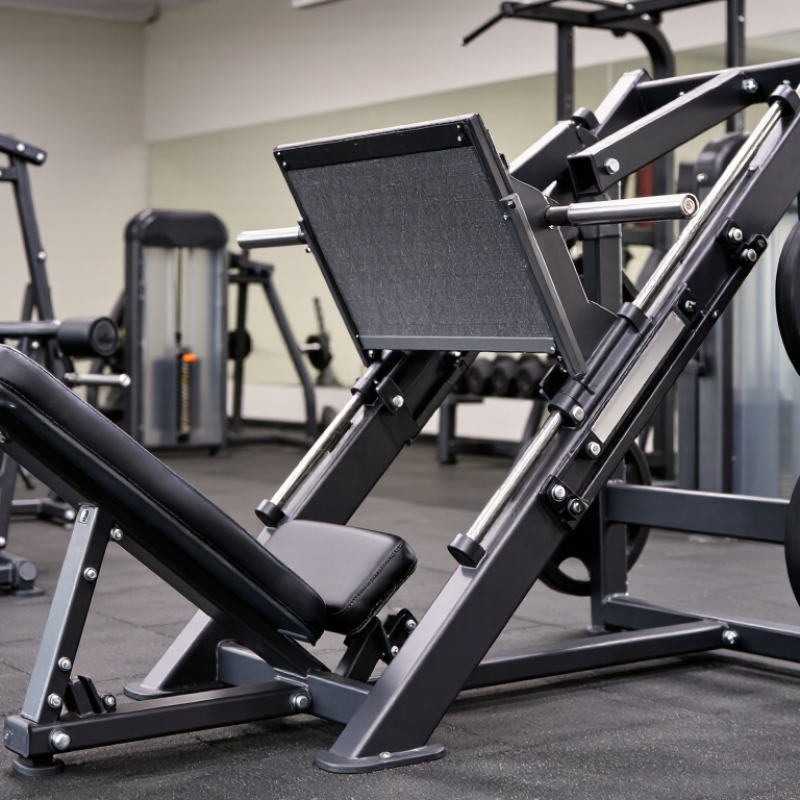
China Best Commercial Leg Press Machines for Sale?

What Defines a Commercial-Grade Leg Press Machine?

A commercial-grade leg press is built for repeated, shared use—not just a large number printed beside its weight rating. The Health & Fitness Association’s 2024 Global Report puts U.S. health-club revenue at $52.6 billion for 2023, reflecting a substantial equipment-servicing market. In busy gyms, machines may face frequent loading, adjustments, and cleaning. A sturdy frame matters. So do sound welds, a stable footprint, and a carriage that moves smoothly without rattling.

Look beyond maximum load. Check whether the manufacturer documents testing against relevant parts of ISO 20957, including general safety and strength-training equipment requirements. Inspect the safety stops, locking mechanism, guide rails, and adjustment points; these are touched repeatedly and can wear. The seat and back pad should support a consistent position, while clear adjustment markings help different users set up quickly. Feel the difference. A heavy machine can still have poor alignment or awkward entry.

Tips: Ask for the rated user capacity, maintenance schedule, warranty terms, and spare-parts availability. Test the carriage through its full range with a controlled load. Listen for scraping. One caveat: published specifications rarely reveal how a machine performs after years of peak-hour use, so request service records or a live demonstration when possible.

Which Leg Press Designs Suit Different Training Needs?

A commercial leg press should match the people who will use it, not just the weight listed on its frame. A 45-degree sled design suits facilities where experienced members want heavy, plate-loaded training. Its angled rails create a clear movement path, but the machine needs ample floor space and careful loading. A horizontal selectorized press is often easier for beginners to adjust. Pin-selected resistance also helps busy gyms reduce plate handling. The trade-off is a more limited loading feel.

For shared training areas, check the seat adjustment, back support, and range of motion before comparing extras. A user should be able to set the seat without straining, keep both feet planted, and stop the sled securely. Compact designs can help smaller studios, though a cramped footplate may not suit every body size. That detail is easy to miss. The best choice depends on member experience, available space, and how often staff can inspect moving parts.

Tips: Test the machine with different users, not only one staff member. Check that adjustment labels are readable and the safety stops engage smoothly. Ask about replacement-part availability and service guidance before buying. A lower purchase price may not mean lower upkeep.

How to Compare Chinese Leg Press Machines for Quality and Performance

China Best Commercial Leg Press Machines for Sale?
How to Compare Chinese Leg Press Machines for Quality and Performance

When comparing commercial leg press machines made in China, look beyond the price and advertised load capacity. Check the frame thickness, weld consistency, and finish around joints. The carriage should travel smoothly without rocking or scraping. Test the machine through its full range of motion, and listen for knocks or uneven movement. Small details matter. Ask for load-test records, component specifications, and clear warranty terms. These documents help you compare claims with verifiable information.

Tips: Check the footplate grip, seat adjustment, and safety stops in person. Confirm that replacement bearings and cables are available. A short test can reveal issues, but it cannot prove long-term durability.

Compare several units under the same conditions, using the same test load and movement range. Look for stable rails, secure adjustment pins, and a comfortable backrest that stays in place. Ask how the supplier checks production quality and handles service requests. A lower price may reflect simpler components, but price alone proves little. I would be cautious about treating a polished sample as proof that every production unit will match it. Request photos or inspection records for the actual order, and allow time to verify details before purchase.

China Best Commercial Leg Press Machines for Sale? How to Compare Quality and Performance

Use this proposed 100-point purchasing rubric to compare commercial leg press machines. The weights are evaluation priorities, not measured ratings of any manufacturer or product. Inspect each machine and verify its specifications before purchase.

Prioritize frame and weld integrity, then assess movement fit, pivots, and load compatibility. Check safety stops, finish, and local availability of replacement parts during a hands-on inspection.

Where to Find Commercial Leg Press Machines for Sale in China

China Best Commercial Leg Press Machines for Sale?

To find commercial leg press machines in China, compare supplier directories, fitness trade fairs, and manufacturers’ own websites. Some sellers produce equipment; others are trading companies. Ask which role they play before requesting a quotation. Factory location, production photos, and references from commercial gyms can help you assess their claims. A video call is useful, but it cannot replace a careful equipment inspection.

Tips: Request frame dimensions, steel specifications, maximum user load, warranty terms, and spare-parts availability. Ask for a video showing the carriage moving under load. Check welds, seat adjustment, footplate grip, and shipping packaging. Keep the details in writing.

A low price is only one part of the decision. Compare the machine’s footprint with your gym layout, and confirm that doors and loading access can accommodate delivery. Ask how the supplier handles replacement parts and technical questions after the sale. A polished product photo proves little. Even detailed specifications can leave gaps, so independent inspection may be worthwhile for larger orders.

What to Check Before Purchasing and Shipping a Leg Press Machine

Before purchasing a commercial leg press from China, ask for the machine’s exact dimensions, net weight, and rated load. Confirm whether the rating includes the sled or refers only to added plates. A sales photo is not proof. Request a video of the actual unit moving through its full range, with safety stops engaged. Check seat adjustment, plate-sleeve diameter, weld finish, and whether the rails move smoothly without rattling. Ask what warranty covers and which wear parts are available. Small details matter.

Before shipping, get the packed crate dimensions and gross weight, not just the machine measurements. These affect freight costs and whether the crate fits through your receiving doors. Confirm how much disassembly is required and whether assembly instructions and hardware are included. Ask how the frame is protected from moisture and scratches during transit. Get a written freight quote that identifies delivery responsibilities, insurance, and estimated timing. A low equipment price can change quickly once port charges and local delivery are added. If possible, arrange an independent inspection before dispatch. It may feel excessive, but fixing a loose bearing after delivery is harder than checking it at the factory.

China Best Commercial Leg Press Machines for Sale? - What to Check Before Purchasing and Shipping a Leg Press Machine
Check Area What to Verify Practical Reference or Example Why It Matters Before Purchase or Shipment
Machine type Confirm whether the machine is a 45-degree sled, horizontal leg press, or vertical leg press. Compare the movement path, user position, loading method, and intended training environment. Different designs have different footprints, loading requirements, and user preferences. Request clear photos or a demonstration video showing the full movement range.
Overall dimensions Check assembled length, width, height, and the space needed for entry, use, and maintenance. A 45-degree commercial sled may occupy roughly 2.2–2.6 m in length and 1.5–1.9 m in width; exact dimensions vary by model. A machine can fit in a room but still block walkways or be difficult to move through a doorway. Measure the installation area, doorways, corridors, lifts, and any turns along the delivery route.
Machine weight and capacity Separate the machine’s own weight from its stated maximum user weight and maximum load capacity. Ask for each limit in kilograms and confirm whether the load limit applies to the total load or to each loading peg. These figures describe different things and should not be treated as interchangeable. Check that the floor can support the machine and expected use; seek qualified advice if floor capacity is uncertain.
Frame and welds Review frame material, main frame dimensions, weld finish, and inspection procedures. Request a specification drawing and close-up images of major joints, welds, and mounting points. Construction details help buyers assess suitability for frequent commercial use. Confirm the inspection standard, quality records, and any available pre-shipment inspection option.
Travel and adjustments Check sled travel, starting position, backrest settings, and adjustment increments. Ask for the usable travel distance and the number and spacing of adjustment positions. Appropriate adjustment helps accommodate users of different heights and training needs. Request a video showing adjustments and the sled moving through its full range without a user.
Safety and stability Inspect safety stops, locking mechanism, hand grips, footplate, and machine stability. Confirm how the safety stops engage and whether they can be reached from the normal seated position. Clear, usable stops and secure construction are important for controlled operation. Ask for operating instructions and verify that the delivered machine includes all safety components.
Footplate and loading pegs Check footplate dimensions and surface, peg diameter, peg length, and plate compatibility. Ask whether the pegs accept the weight plates used at the facility and whether collars are supplied. Compatibility affects loading, unloading, and the amount of usable weight that can be added. Confirm measurements in writing; do not assume all plates or collars use the same dimensions.
Finish and wear parts Review coating, upholstery, guide surfaces, bearings, and replaceable components. Request details on cleaning, lubrication, and the availability of replacement pads, bearings, and hardware. Maintenance requirements and replacement-part access affect long-term ownership. Obtain the warranty terms, maintenance instructions, and a parts list before placing the order.
Packing and shipping dimensions Request packed dimensions, gross weight, number of packages, and packing method. Crated dimensions and weights can differ substantially from the assembled machine specifications. Freight quotes, container planning, handling equipment, and delivery access depend on the packed measurements. Use confirmed packing data—not estimated assembled dimensions—when requesting a shipping quotation.
Disassembly and assembly Find out which parts are removed for transport and what tools or lifting equipment assembly requires. Ask for an illustrated assembly guide, hardware list, and the approximate number of people needed. Large frames may require suitable unloading and installation arrangements. Confirm who is responsible for unloading, installation, and removal of packaging.
Shipping terms and insurance Confirm the named delivery location, applicable Incoterms, freight charges, and cargo insurance responsibilities. Request a written quotation that identifies included costs and any charges payable at destination. Responsibilities for transport, risk, and costs depend on the agreed shipping terms. Have the terms reviewed and make sure the consignee and delivery address are correct.
Customs and delivery Check the required commercial invoice, packing list, product description, and any destination-specific import requirements. Tariff classification, duties, taxes, and documentation requirements depend on the destination country. Incomplete or inaccurate paperwork can delay clearance or delivery. Confirm requirements with the destination customs authority or a qualified customs broker before dispatch.
Pre-shipment records Arrange a final check of the machine, accessories, finish, labels, and package condition. Request dated photos of the completed machine, included parts, and sealed packages. Records help document the order’s condition before it leaves the shipping point. Compare the inspection results with the approved specification and purchase order.

Dimensions and ranges shown are indicative planning references, not specifications for a particular machine. Confirm exact measurements, capacities, packing data, and shipping terms with the seller before ordering.

FAQS

What defines a commercial-grade leg press machine?

It is designed for repeated, shared use. Look for a sturdy frame, sound welds, a stable footprint, and a smooth-moving carriage. A high weight rating alone proves little.

Which safety features should buyers inspect?

Check the safety stops, locking mechanism, guide rails, and adjustment points. Ask for documented testing against relevant parts of ISO 20957. These components can wear with frequent use.

How can I assess comfort and fit?

The seat and back pad should support a consistent position. Clear adjustment markings help different users set up quickly. Try getting on and off, too. Awkward entry matters.

Where can I find commercial leg press suppliers in China?

Compare supplier directories, fitness trade fairs, and manufacturers’ websites. Ask whether each seller is a manufacturer or a trading company. Production photos and gym references can help, but they are not proof.

What details should I request before buying?

Request exact dimensions, steel specifications, rated user capacity, warranty terms, maintenance guidance, and spare-parts availability. Ask whether the load rating includes the sled or only added plates. Small details matter.

How can I check the machine’s movement before purchase?

Request a video of the actual unit moving through its full range under load. Check the weld finish, seat adjustment, footplate grip, and plate-sleeve diameter. Listen for scraping or rattling.

What should I confirm before shipping?

Get the packed crate dimensions and gross weight. Confirm disassembly needs, included hardware, assembly instructions, and protection against moisture and scratches. Make sure the crate fits through your receiving doors.

How can I avoid unexpected delivery costs?

Request a written freight quote covering delivery responsibilities, insurance, and estimated timing. Ask about port charges and local delivery. A low equipment price can rise quickly.

How can I judge long-term reliability?

Ask for service records or a live demonstration, plus the maintenance schedule and replacement-part details. Published specifications rarely show years of peak-hour use. A polished photo is easy to trust; I might still be missing something.

Conclusion

This guide explains what sets Commercial Leg Press Machines apart, including the sturdy construction, smooth movement, and durability expected for frequent use in gyms and training facilities. It compares common leg press designs and shows how factors such as available space, training goals, user comfort, and adjustment options can help determine which style is the best fit.

It also outlines how to assess Chinese-made machines for build quality, performance, materials, and safety features, and where buyers may look for commercial equipment in China. Before purchasing, consider the machine’s dimensions, load capacity, specifications, warranty terms, and after-sales support. For shipping, confirm packaging, delivery arrangements, installation requirements, and all associated costs in advance to help ensure the equipment arrives in suitable condition and meets the facility’s needs.

Seraphina

Seraphina

Seraphina is a professional marketing specialist dedicated to helping businesses understand products, markets, and customer needs through clear, practical, and insightful communication. With a strong understanding of the company’s solutions, she regularly creates and updates professional blog......