Choosing the best Condo Gym Equipment in 2026 is not a popularity contest. In a shared residential room, every purchase must balance training value, noise, safety, maintenance, and floor space. A treadmill may look impressive, yet its vibration can travel through a concrete slab. A compact cable station can serve more users, but only when its pulleys move smoothly and its anchor points are inspected regularly. The right answer depends on residents, not glossy product photos.
Industry evidence supports this practical approach. The Health & Fitness Association’s 2024 Global Report recorded 184 million health-club members worldwide in 2023, showing sustained demand for accessible exercise spaces. ACSM’s Worldwide Survey of Fitness Trends for 2025 ranked wearable technology and traditional strength training among leading trends. These findings point toward versatile, measurable equipment rather than oversized machines with one narrow function. The Global Wellness Institute’s 2024 Global Wellness Economy Monitor valued the physical-activity sector at $1.06 trillion in 2023. Wellness is growing. That does not make every premium machine wise.
This guide compares adjustable dumbbells, resistance bands, benches, cable systems, bikes, rowers, and recovery tools through a condominium lens. We will consider footprint, decibel risk, cleaning access, user flow, accessibility, warranty support, and total cost of ownership. A tape measure matters. So does a conversation with building management. Some recommendations may remain imperfect, especially where budgets, ventilation, or neighbor sensitivity differ. That limitation is worth admitting. The best Condo Gym Equipment setup is usually quiet, flexible, and easy to supervise. It should help a resident complete a 30-minute workout without turning the hallway into a loading dock.
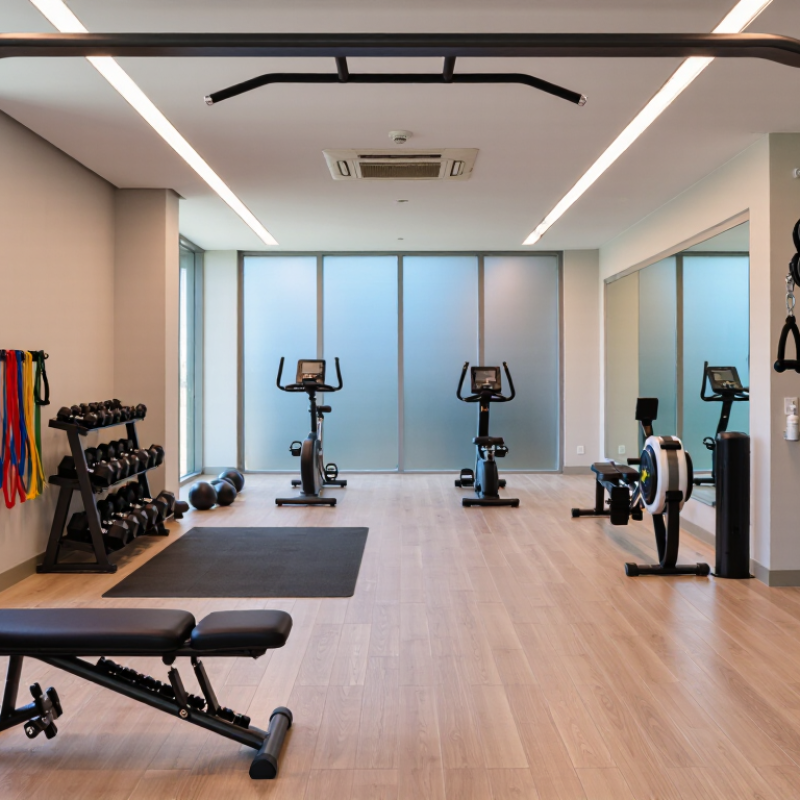
Condo Gym Equipment: Definition, Purpose, and Space Requirements
What Is the Best Condo Gym Equipment in 2026?
Condo gym equipment refers to compact fitness machines and accessories designed for shared residential spaces. Its purpose is not to fill every corner with machinery. It should support strength, cardio, mobility, and safe daily movement. A practical setup may include an adjustable bench, resistance cables, dumbbells, a compact bike, and floor mats. These options serve different fitness levels without creating a crowded training area.
Space planning matters more than equipment quantity. Measure the room before purchasing anything. Record ceiling height, doorway width, floor area, and available electrical outlets. A machine may fit its listed dimensions but still need extra clearance for movement and maintenance.
Leave a clear walking path around each station. Keep heavier equipment on stable flooring, especially above occupied rooms. Rubber flooring can reduce vibration, but it cannot eliminate every sound.
Ventilation also matters.
A cardio machine needs airflow, while strength equipment needs open movement space. Shared gyms should include visible instructions, secure storage, and surfaces that are easy to clean. Accessibility deserves attention, too; narrow passages can exclude users with limited mobility. Professional installers can check structural limits and electrical safety before setup. Still, specifications are not perfect. User behavior, poor storage, and overlooked ceiling clearance often create problems after installation. The best condo gym is therefore the one residents can use comfortably, safely, and consistently.
How to Choose Equipment for Safety, Noise Control, and Durability
What Is the Best Condo Gym Equipment in 2026?
In a condo gym, safety begins with stable, compact equipment. A selectorized cable machine, adjustable bench, and fixed-weight dumbbells usually offer strong versatility. ACSM’s 2025 Worldwide Survey ranked traditional strength training fifth among global fitness trends. That supports choosing resistance equipment for shared spaces. Look for clear load limits, enclosed moving parts, non-slip feet, and adjustable stops. ISO 20957-1 also addresses stability, construction, and safety requirements for stationary training equipment.
Noise needs measurement, not guesswork. The World Health Organization’s community-noise guidance recommends about 30 dBA indoors at night for good sleep. A dropped dumbbell can exceed that level instantly. Use rubber flooring, lifting platforms, soft-close weight stacks, and wall clearance around moving parts. A basic sound meter can identify sharp impact noise better than human judgment. Keep treadmills on vibration-isolating mats, and inspect belt alignment regularly. Quiet matters.
Durability is more than thick steel. Choose equipment with replaceable cables, sealed bearings, corrosion-resistant finishes, and accessible service points. The U.S. National Institute for Occupational Safety and Health identifies 85 dBA over an eight-hour workday as a hearing-risk threshold. Condo workouts are shorter, but repeated noise still affects neighbors. I have found that oversized equipment often creates maintenance problems in tight rooms. Smaller units may work better, though some sacrifice comfort. That trade-off deserves honest testing before installation. Inspect bolts weekly, record unusual sounds, and remove damaged equipment promptly.
What Is the Best Condo Gym Equipment in 2026?
A comparison of common home-gym equipment based on typical operating noise, occupied floor area, and condo suitability.
Lower noise and smaller floor area are generally better for condos. Resistance bands, adjustable dumbbells, and yoga mats usually create the least disturbance and require the least space. Cardio machines provide more exercise variety but need additional attention to vibration control, floor protection, ventilation, and safe clearance.
Values are representative planning figures compiled from typical residential equipment specifications and commonly reported operating ranges. Actual noise depends on floor construction, workout intensity, maintenance, and impact-absorbing flooring.
Best Cardio Machines for Compact Condo Fitness Rooms
The best cardio equipment for a compact condo fitness room must save space without feeling limiting. In my experience, a folding treadmill offers the most familiar workout, especially for brisk walking or short interval sessions. Measure the open and folded footprint carefully. A few extra centimeters can affect access, storage, and emergency movement.
A magnetic exercise bike is often quieter and easier to place near a wall. Its upright design leaves useful floor space for stretching. A compact elliptical can provide low-impact movement, but its moving handles need more clearance than expected. Rowing machines train the whole body, although their long rails may obstruct a narrow walkway. Noise matters too. Rubber flooring can reduce vibration, but it will not hide heavy footfalls from neighbors.
A qualified fitness installer should check ceiling height, electrical safety, ventilation, and equipment stability before regular use. Users should keep a clear path around moving parts and inspect pedals, belts, and adjustment points. I once underestimated how warm a small room became after twenty minutes of cardio. That mistake changed my preference toward equipment with a smaller motor and lower heat output. Still, compact machines can feel restrictive. A short test session reveals more than a specification sheet. Consider workout variety, storage habits, and whether the machine remains comfortable after several weeks.
Best Strength and Functional Training Equipment for Condos
What Is the Best Condo Gym Equipment in 2026?
For condo gyms, the best equipment supports strength and functional training without wasting floor space. A compact adjustable bench, dumbbells, resistance bands, and a wall-mounted cable station create many training options. Users can perform squats, presses, rows, carries, and controlled rotations. That matters because the World Health Organization recommends muscle-strengthening activities on at least two days each week.
The American College of Sports Medicine ranked traditional strength training fifth in its 2025 Worldwide Survey of Fitness Trends. Functional fitness also remained among the leading trends. These findings support practical equipment choices, not oversized machines. A cable station with adjustable resistance can serve beginners and experienced residents. Dumbbells allow unilateral exercises, which may reveal balance or strength differences. A rubberized floor surface also reduces noise during light training. Quiet equipment matters in shared buildings.
Safety still needs closer attention. Some condo gyms place benches too near walls, leaving little room for safe movement. That is an avoidable design mistake. The International Health, Racquet & Sportsclub Association reported 72.9 million American fitness facility members in 2023, showing strong demand for accessible exercise spaces. However, membership data does not guarantee good equipment use. Clear instructions, regular inspections, and visible cleaning procedures remain essential. My practical preference is simple: choose fewer versatile tools, then measure whether residents actually use them. Bigger is not always better.
Essential Maintenance and Layout Guidelines for Condo Gym Equipment
What Is the Best Condo Gym Equipment in 2026?
The best condo gym equipment must suit the building, not just the workout. Choose compact, multi-use equipment with stable frames and adjustable resistance. Before installation, measure doorways, ceiling height, and turning space. Check the floor’s load capacity with a qualified building professional. Rubber flooring can reduce vibration, but it may not solve every noise problem. I have seen attractive layouts fail because residents ignored equipment clearance. A perfect plan on paper can still feel awkward.
Maintenance protects users and the property. Inspect cables, bolts, handles, and adjustment pins every week. Tighten loose fasteners carefully, but avoid over-tightening moving parts. Wipe sweat from contact surfaces after busy periods. Check ventilation around cardio equipment, especially in windowless rooms. Keep an inspection log with dates, findings, and repairs. This record supports consistent care and reveals repeated faults. Small defects grow quickly.
Tips: Keep aisles clear. Measure twice. Place heavier equipment near structural walls when approved by a professional. Leave enough space for safe movement and emergency access. Use floor protectors beneath movable units. Schedule deeper inspections monthly, including belt alignment, frame cracks, and unusual sounds. If equipment feels unstable, remove it from service immediately. One practical mistake is storing cleaning supplies beside electrical equipment; a separate, dry cabinet is safer.
Conclusion
Choosing the best Condo Gym Equipment in 2026 starts with understanding how limited space, shared walls, and varied resident needs affect gym design. The ideal setup should combine compact cardio machines, adjustable strength tools, and versatile functional training equipment while leaving safe walking and exercise areas. Equipment should be selected for stable construction, low noise, shock reduction, easy controls, and long-term durability. Safety features, appropriate spacing, ventilation, and flooring are equally important for creating a comfortable and reliable fitness room.
A successful condo gym also depends on smart organization and regular maintenance. Machines should be arranged to separate active movement zones from quieter strength areas, with clear access to entrances and emergency pathways. Routine inspections, cleaning, lubrication, cable checks, and prompt repairs can reduce downtime and prevent accidents. By balancing functionality, noise control, storage efficiency, and maintenance requirements, property managers can create a practical fitness space that serves different training goals without overwhelming the building or its residents.