Commercial gyms are rebuilding their strength areas around durable, flexible equipment. Plate Loaded Machines remain central to that shift.
The Health & Fitness Association reported about 184 million health club members worldwide in 2023. Its 2024 Global Fitness Industry Report also recorded nearly $97 billion in global industry revenue. Those figures suggest stronger demand for equipment that supports heavy training and frequent use.
The ACSM Worldwide Survey of Fitness Trends has repeatedly placed strength training among leading industry priorities. That matters on a busy gym floor. Members want visible progress, simple adjustments, and equipment that feels stable under load.
Dr. Brad Schoenfeld, a leading hypertrophy researcher, has emphasized, “There is no one-size-fits-all approach to resistance training.” That principle should guide equipment selection. A chest press may suit a beginner, while a plate-loaded hack squat may better serve an experienced lifter.
The best commercial choices must balance biomechanics, frame strength, loading capacity, maintenance, footprint, and member flow. A machine can look impressive yet create awkward joint positions. That mistake is easy to miss during a showroom demonstration.
This guide evaluates seven Plate Loaded Machines for commercial gyms. It considers practical details, including Olympic plate storage, seat adjustments, range of motion, and access around the machine. No ranking is perfect. Local membership profiles, budgets, and flooring requirements can change the result.
Expect a practical comparison, not a catalog of oversized steel. The strongest option is the one members can use safely, repeatedly, and confidently. That is where equipment value becomes visible.
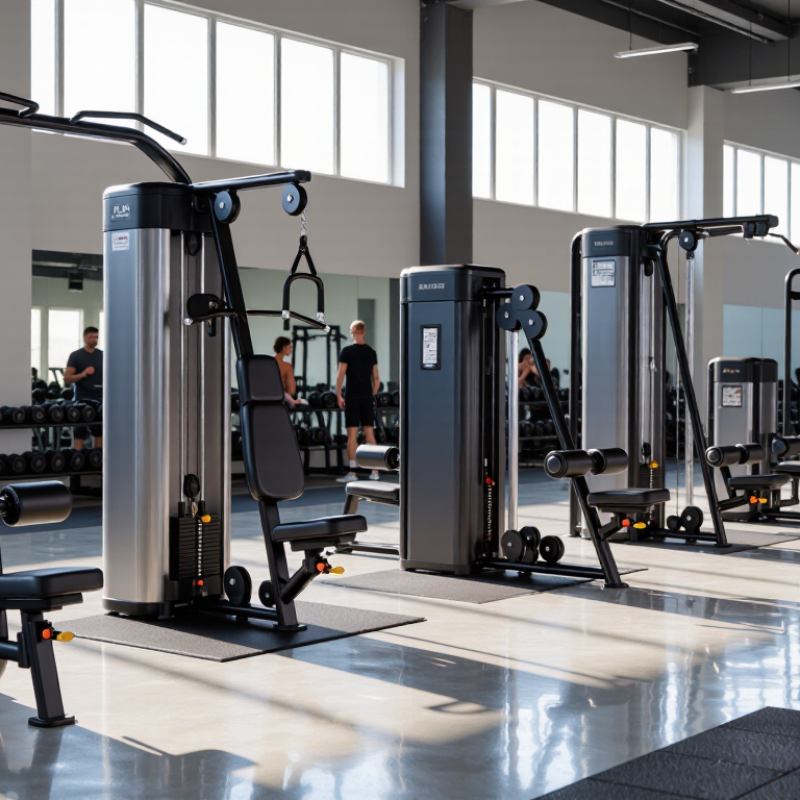
Plate-loaded machines use free-weight plates as external resistance. You place the plates on storage pegs connected to a lever system. When you push or pull, the lever rotates around a fixed pivot. This movement transfers resistance to the machine’s pads, handles, or footplate.
The load does not feel identical throughout the exercise. Lever length, pivot position, and body angle change the resistance curve. A chest press may feel heavier near the middle of the movement. A leg press can feel demanding at the deepest position. The plates show total weight, but they do not show the exact force reaching your muscles. That difference matters.
In commercial gyms, useful options include chest presses, shoulder presses, rowing machines, pulldowns, hack squats, leg presses, and calf machines. Each design supports a guided path while allowing heavier loading than many cable stations. During equipment checks, staff should inspect pivots, welds, pads, safety stops, and plate pegs. Small faults can become distracting during a heavy set.
I have noticed that users often load too quickly. More plates do not guarantee better training. Seat adjustment and controlled repetitions usually matter more. No machine fits every body perfectly. An unusually long torso or limited shoulder mobility may require a different setup. Coaches should explain the movement, verify the user’s position, and encourage a lighter test set before adding weight. Simple idea. Good setup takes practice.
Choosing the seven best plate loaded machines starts with member demand, not catalog appeal. The practical lineup includes a chest press, incline press, shoulder press, lat pulldown, low row, leg press, and hack squat. These machines cover major movement patterns while supporting different training abilities.
The Health & Fitness Association reported 72.9 million U.S. fitness facility members in 2023. That volume makes durability and throughput commercial priorities. Choose frames with stable footplates, smooth pivots, and clear adjustment points. A busy leg press should allow quick entry and exit. Numbered settings help new members train safely without constant staff assistance. Test the machine with short and tall users. A comfortable fit for only one body type is a costly weakness.
Space matters too. Measure the working area, not just the frame. Include plate storage, walkways, and clearance for moving limbs. The American College of Sports Medicine’s 2024 fitness trends survey kept traditional strength training among leading industry priorities, supporting investment in familiar resistance equipment. Still, popularity can mislead. A shoulder press may attract attention but sit unused if members prefer cables. Track usage for several weeks before expanding. I would also inspect welds, bearings, upholstery, and guard points during busy hours. Machines that feel excellent in a showroom may become noisy, crowded, or awkward after months of daily use. Content from equipment suppliers often overlooks that uncomfortable reality.
| Rank | Plate-Loaded Machine | Primary Muscle Groups | Movement Pattern | Typical Plate Capacity | Approx. Footprint | Recommended User Level | Commercial Selection Factors | Overall Suitability |
|---|---|---|---|---|---|---|---|---|
| 1 | 45-Degree Leg Press | Quadriceps, glutes, hamstrings, calves | Compound lower-body press | Approximately 450–900 kg total, depending on frame and storage capacity | About 230–260 cm L × 150–170 cm W × 140–160 cm H | Beginner to advanced | High member demand, large weight capacity, adjustable backrest, safety stops, and easy plate loading | Excellent for high-volume facilities |
| 2 | Hack Squat Machine | Quadriceps, glutes, hamstrings | Supported squat | Approximately 300–600 kg total | About 220–250 cm L × 150–180 cm W × 140–170 cm H | Intermediate to advanced | Look for an angled footplate, shoulder padding, adjustable safety catches, smooth carriage travel, and a stable base | Excellent for strength-focused gyms |
| 3 | Incline Chest Press | Upper chest, front deltoids, triceps | Supported horizontal push | Approximately 150–300 kg total | About 150–190 cm L × 130–160 cm W × 140–170 cm H | Beginner to advanced | Prioritize independent arms, multiple-grip handles, adjustable seat height, long-term upholstery durability, and a natural pressing path | Excellent for upper-body training areas |
| 4 | High Row Machine | Latissimus dorsi, rhomboids, trapezius, biceps | Supported vertical pull | Approximately 150–300 kg total | About 140–180 cm L × 120–150 cm W × 160–190 cm H | Intermediate to advanced | Check chest support, handle options, range-of-motion stops, frame rigidity, and clearance for taller users | Very good for back-training zones |
| 5 | Shoulder Press Machine | Deltoids, triceps, upper chest | Overhead press | Approximately 100–250 kg total | About 130–170 cm L × 120–150 cm W × 150–180 cm H | Beginner to advanced | Choose adjustable seat settings, neutral and pronated grips, independent arms, balanced resistance, and accessible plate storage | Very good for general-purpose gyms |
| 6 | Seated Calf Raise | Soleus and gastrocnemius muscles | Seated ankle plantar flexion | Approximately 100–250 kg total | About 120–160 cm L × 80–110 cm W × 100–130 cm H | Beginner to advanced | Important features include a comfortable thigh pad, adjustable ankle platform, generous range of motion, and compact dimensions | Good for targeted lower-leg training |
| 7 | Glute Drive or Hip Thrust Machine | Gluteus maximus, hamstrings, core stabilizers | Loaded hip extension | Approximately 150–350 kg total | About 150–190 cm L × 120–160 cm W × 120–150 cm H | Beginner to advanced | Evaluate belt comfort, hip-pad design, footplate position, entry and exit access, plate storage, and resistance alignment | Excellent for modern strength and glute-training areas |
Note: Dimensions and plate capacities are representative commercial ranges. Exact specifications vary by frame design, adjustment system, safety features, and manufacturer configuration.
7 Best Plate-Loaded Machines for Commercial Gyms
Plate-loaded machines provide a practical bridge between free weights and guided resistance. They let members train heavily while keeping the movement path controlled. For strength and muscle development, a commercial gym should consider seven useful options: leg press, hack squat, pendulum squat, chest press, shoulder press, low row, and high row machines.
The leg press and squat machines load the quadriceps, glutes, and hamstrings with strong lower-body support. A chest press builds pressing strength without demanding constant balance. The shoulder press targets the deltoids, while low and high rows develop the back through horizontal and vertical pulling. In my experience, lifters often add plates too quickly. A slower descent and full range usually create better results than impressive-looking stacks. Machine geometry also matters. One design may feel natural, while another may irritate a user’s shoulders or knees.
Tips: Place lighter plates on busy machines first. Adjust the seat so joints align with the pivots. Keep your back supported and avoid locking joints aggressively. Use controlled repetitions, especially during the lowering phase. Staff should inspect bolts, handles, and storage pegs regularly. Small maintenance problems become safety concerns. Record sets, repetitions, and load changes to track progress honestly. Some members may need a shorter range at first, and that is not failure. It is a starting point.
7 Best Plate Loaded Machines for Commercial Gyms
Choosing the best plate loaded machines requires more than comparing maximum weight. A hack squat, leg press, pendulum squat, chest press, shoulder press, low row, and high row should each support controlled movement. Check the frame for smooth welds, reinforced joints, and stable feet. Safety catches must be easy to adjust, even when the user is tired. I have seen impressive machines fail in daily use because their handles loosened or their bearings became noisy.
Durability depends on more than thick steel. Inspect pivot points, loading sleeves, upholstery seams, and protective finishes. Commercial equipment faces repeated loading, sweat, cleaning, and occasional misuse. A well-designed machine should feel stable without trapping the user in one rigid path. User experience matters too. Wide entry points, clear adjustments, comfortable handles, and balanced resistance reduce hesitation during busy sessions. Some machines look powerful but feel awkward for shorter members. That weakness is easy to overlook.
Tips: Test every machine with different body sizes before purchasing. Load plates gradually and listen for uneven sounds. Ask staff to perform a basic safety inspection each week. Keep records of repairs, because small issues often become expensive failures. Also, do not judge comfort after one repetition. Spend several minutes on each machine, changing the seat, handles, and range of motion. A perfect choice on paper may still frustrate real members.
A balanced plate-loaded area should serve the whole body, not just popular pressing movements. In my experience, seven practical choices cover most commercial gym needs: a leg press, hack squat, chest press, shoulder press, low row, high row, and calf raise. This mix matters. It supports pushing, pulling, squatting, and lower-leg training without relying on one exercise pattern.
Place the leg press and hack squat near open flooring for safer plate handling. A chest press and shoulder press can share a pressing zone, but leave enough space for users to load plates comfortably.
The low row and high row should sit near each other, helping members compare horizontal and vertical pulling. A calf raise adds focused lower-leg work and uses little floor space. I prefer machines with clear adjustment points, stable platforms, and storage horns at reachable heights.
Capacity planning needs more than counting machines. Track peak-hour queues for four weeks. A single chest press may become a bottleneck, while the calf raise stays available. That is easy to miss. Also, heavy plates create noise and uneven loading when storage is poorly placed. Leave room for staff inspections and daily cleaning. My own selection process is not perfect; member feedback sometimes challenges the original layout. Recheck traffic patterns after installation, because real behavior often differs from the floor plan.
A practical lineup includes leg press, hack squat, chest press, shoulder press, low row, and high row machines. A pendulum squat can add another lower-body option. Together, they cover pressing, pulling, squatting, and leg training.
Popular catalog images can mislead. Track machine usage for several weeks before buying more units. An attractive shoulder press may remain empty. That is an expensive lesson.
Look for stable footplates, smooth pivots, strong welds, reliable bearings, and durable upholstery. Check handles, bolts, storage pegs, and guard points. Noise reveals weakness.
Test it with short and tall users. Seats, pads, and handles should allow clear joint alignment. Numbered adjustments help new members train with less staff assistance. One perfect fit is not enough.
Measure the full working area, not only the frame. Include plate storage, walkways, and clearance for moving limbs. A leg press needs easy entry and exit during busy periods. Crowding can make a good machine awkward.
Adjust the seat so the joints align with the machine pivots. Keep the back supported and avoid forcefully locking the joints. Use controlled repetitions, especially while lowering the weight. Lighter loads often teach better control.
Record sets, repetitions, and load changes honestly. Many lifters add plates too quickly. A slower descent and full range can improve training quality. More weight is not always better.
Staff should inspect bolts, handles, bearings, upholstery, and storage pegs regularly. Check machines during busy hours, not only in quiet showrooms. Small defects can become safety concerns. I may overlook something, but real usage tells the truth.
Not always. Some members may need a shorter range initially. That is a starting point, not failure. Increase the range gradually when comfort and control improve. Pain should not be ignored.
Plate Loaded Machines are strength-training systems that use removable weight plates to create resistance, giving users direct control over training intensity. Unlike selectorized equipment, these machines often provide a more natural lifting feel while offering guided movement paths that can improve stability and focus. This article explains how plate-loaded equipment works and highlights the key factors commercial gyms should consider, including space requirements, adjustability, accessibility, maintenance needs, and compatibility with different user abilities.
It also reviews seven effective machine categories for building strength and muscle, such as pressing, rowing, squatting, leg-pushing, and pulling movements. Each option should be compared for safety features, frame durability, smooth operation, ergonomic design, and overall user experience. A balanced selection should target all major muscle groups, support varied training goals, and fit the gym’s available space, budget, and expected traffic. Careful planning helps create a versatile, reliable, and engaging training environment for beginners and experienced members alike.

We use essential cookies to deliver a faster, more secure browsing experience. You can accept or decline non-essential cookies.