Buying Selectorized Strength Equipment can shape how safely and effectively a facility serves its members. The right machines should support clear movement paths, adjustable resistance, durable construction, and comfortable use. They must also fit the room, budget, maintenance plan, and training goals. A machine that looks impressive may still feel awkward after ten minutes of repeated use.
Small details matter. Check the seat adjustments, cable movement, weight-stack labels, and protective guards. Sit on the equipment yourself. Does the range of motion feel natural? Can a shorter user reach the handles without twisting? These practical checks often reveal more than a product brochure. Experience from facility managers, trainers, and service technicians can provide valuable evidence. Manufacturer specifications also deserve careful review, especially for frame materials, warranty coverage, replacement parts, and safety testing.
Not every decision will be perfect. I have seen buyers focus on price and overlook delivery access, floor protection, or future repairs. That mistake can become expensive. A reliable evaluation compares several models under realistic conditions, not just during a brief showroom demonstration. Consider how beginners, older adults, and experienced lifters will use each station. Ask about installation requirements and expected maintenance intervals. Good equipment should remain dependable during busy morning sessions, not only on opening day.
These ten tips will help buyers examine performance, usability, safety, and long-term value with greater confidence. Take measurements. Test the details. A thoughtful purchase protects both investment and user experience.
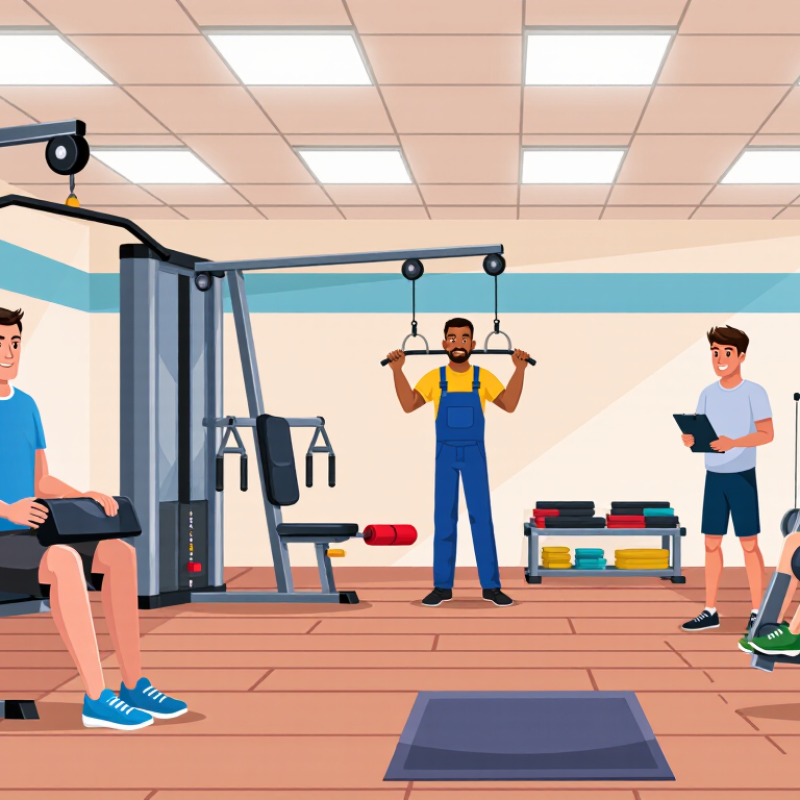
Understanding Selectorized Strength Equipment and Its Main Uses
Selectorized strength equipment uses a fixed path, adjustable seat, and weight stack to control resistance. The user selects a load with a pin, rather than handling loose plates. This design makes resistance changes quick and measurable.
These machines support common movements such as chest pressing, rowing, leg extension, leg curling, and pulldowns. They are useful for beginners learning movement patterns with less coordination demand. They also serve older adults, rehabilitation clients, and busy gyms needing efficient training stations. A clear adjustment system matters. Seat height, back support, and starting position should match the user’s body.
Look closely at the machine’s movement path. It should feel smooth, without sudden resistance or excessive joint pressure. Weight increments should allow gradual progression. Large instruction labels can reduce confusion during unsupervised sessions. A durable frame matters, but comfort and access matter too. A machine can be strong and still fit poorly.
One practical mistake is judging equipment only by its appearance. Test the full range of motion. Check whether the handles stay reachable at the starting position. Different body shapes may experience very different comfort levels. Selectorized equipment improves consistency, but it cannot correct poor posture or unsuitable loading. Professional guidance remains valuable, especially after an injury. The best choice depends on users, available space, training goals, and maintenance capacity.
| Tip | Buying Dimension | Typical Data or Specification | Main Use | What to Check Before Buying |
|---|---|---|---|---|
| 1 | Equipment Type | Chest Press Lat Pulldown Leg Press Leg Curl | Guided resistance training for specific muscle groups | Select machines that match the intended training plan. Common selectorized machines use a weight stack, pulley system, cam, and adjustable seat or pads to guide the exercise path. |
| 2 | Resistance System | Weight-stack resistance with incremental plates | Fast load changes between users and exercises | Confirm that the stack moves smoothly, the cable remains aligned, and the safety selector pin is easy to insert and secure. The stated stack weight is not always identical to the effective resistance at the handle. |
| 3 | Weight Increments | Common increments: approximately 2.5–5 kg per plate | Progressive overload and controlled strength development | Smaller increments are useful for beginners, rehabilitation, and upper-body exercises. Check whether optional add-on weights are available for smaller progressions. |
| 4 | Adjustability | Adjustable seats, back pads, handles, range-of-motion stops, or thigh pads | Improved fit for different body sizes and exercise positions | Look for clearly marked adjustment points, secure locking mechanisms, and adjustment ranges that accommodate the intended users. A correct starting position helps maintain joint alignment. |
| 5 | Biomechanics and Movement Path | Fixed or guided movement path; cam-shaped resistance may vary through the range of motion | Consistent technique and reduced balance requirements | Test the full movement without load. The pivot points, handles, pads, and range-of-motion stops should feel natural and should not create uncomfortable pressure on the joints. |
| 6 | Footprint and Clearance | Typical single-station footprint: about 1.0–2.5 m², excluding user clearance | Efficient use of space in home gyms, hotels, clinics, and fitness facilities | Measure doorways, elevators, ceiling height, installation routes, and the required operating area. Leave adequate clearance around moving arms, weight stacks, seats, and users. |
| 7 | User Capacity | Often designed for repeated daily use; capacity varies by frame and model | Individual training or high-frequency facility use | Check the maximum user weight, frame warranty, cable rating, seat adjustment limits, and published commercial-use classification. Do not assume that a similar-looking machine has the same duty rating. |
| 8 | Safety Features | Enclosed weight stack, selector-pin tether, non-slip surfaces, adjustable stops, and stable frame | Controlled resistance training with lower equipment-handling demands | Inspect guards, cable termination points, pad edges, locking pins, and frame stability. Selectorized equipment still requires proper instruction, safe loading, and supervision where appropriate. |
| 9 | Maintenance Requirements | Routine cleaning, cable inspection, fastener checks, and periodic lubrication where specified | Reliable operation and longer service life | Request the maintenance schedule and availability of replacement cables, pulleys, upholstery, pins, and hardware. Cables should be inspected for broken strands, kinks, fraying, or abnormal wear. |
| 10 | Training Suitability | Beginners Older Adults Rehabilitation General Strength | Muscle-specific training with relatively simple setup and repeatable technique | Selectorized equipment can be useful for users who need stability or straightforward instructions, but suitability depends on the person’s health, mobility, goals, and professional guidance. It should complement—not automatically replace—free-weight, functional, or cardiovascular training. |
| Data ranges are general industry planning guidelines. Exact dimensions, stack ratings, adjustment ranges, user limits, and maintenance intervals vary by equipment design and should be confirmed in the manufacturer’s technical documentation before purchase. | ||||
FAQS
It uses a fixed movement path and an adjustable weight stack. A pin selects the resistance. No loose plates are needed.
Beginners, older adults, rehabilitation clients, and busy gym users may benefit. They reduce coordination demands during common exercises. Guidance still matters.
Common movements include chest presses, rows, pulldowns, leg extensions, and leg curls. Each machine targets a specific movement pattern.
Set the seat, back support, handles, and starting position carefully. Your shoulders should stay relaxed. Your knees should not feel cramped.
Resistance should remain controlled through the intended range. Avoid sudden loading or excessive joint pressure. Stop if the motion feels forced.
Inspect the frame, guide rods, cables, pulleys, joints, and seat mounts. A rigid welded frame should feel stable under load. Loose parts deserve attention.
Shorter users need reachable handles without raised shoulders. Taller users need enough space for their knees. One setting cannot suit everyone.
The machine pivot should follow the target joint’s natural path. During leg extensions, align the knee with the machine pivot. Small alignment errors matter.
No. A fixed path cannot correct poor posture or unsuitable loading. Watch for shifting hips, raised shoulders, or awkward breathing. I sometimes rush setup. That is a mistake.
Consider the users, available floor space, training goals, and maintenance capacity. Test the complete movement before deciding. A strong machine may still fit poorly.
Conclusion
Buying Selectorized Strength Equipment requires more than comparing prices or choosing the most attractive design. Start by understanding how selectorized machines work and whether they suit your facility, user population, and training objectives. Consider whether the equipment supports strength development, rehabilitation, general fitness, or supervised group training. Evaluate construction quality, frame stability, upholstery, cable systems, adjustability, and biomechanics to ensure smooth, natural movement for users of different sizes and abilities.
Safety and comfort should also guide your decision. Look for intuitive weight-selection systems, secure adjustments, clear instructions, ergonomic padding, and features that reduce unnecessary strain. Measure available space carefully, including access paths and workout clearance. Finally, assess the total cost of ownership by reviewing purchase price, installation, warranties, maintenance requirements, replacement parts, and supplier support. A well-informed investment in Selectorized Strength Equipment can improve training consistency, user satisfaction, operational efficiency, and long-term facility value.