Choosing Commercial Functional Trainers is not a simple matter of comparing weight stacks and glossy specifications. A reliable decision begins with the training environment. Consider the users, available floor space, ceiling height, and expected daily traffic. A busy facility may need dual adjustable pulleys, multiple cable stations, and reinforced anchor points. A private studio may value a smaller frame and quieter operation.
Michael Boyle, a respected strength and conditioning coach, describes functional training as “training that makes you better at your sport.” This principle also applies to equipment selection. The machine should support practical movement, not merely look impressive. Check the pulley adjustment range, cable smoothness, handle storage, frame stability, and resistance increments. A 200-pound stack means little if the cable path feels rough or the adjustment pins loosen after repeated use. Touch the machine. Test it under load.
Maintenance is often overlooked. That is a mistake. Ask about replacement cables, lubrication requirements, service response, and warranty coverage. Review the manufacturer’s technical documentation, not only sales claims. Speak with facility owners who have used the same model for several years. Their experience may reveal noise, paint wear, or inconvenient attachment storage.
No guide can predict every gym’s needs. I might even overvalue durability and underestimate user comfort. That limitation deserves attention. The strongest choice balances biomechanics, workflow, safety, budget, and long-term support. When these factors align, Commercial Functional Trainers become dependable tools for varied training, steady coaching, and sustainable facility growth.
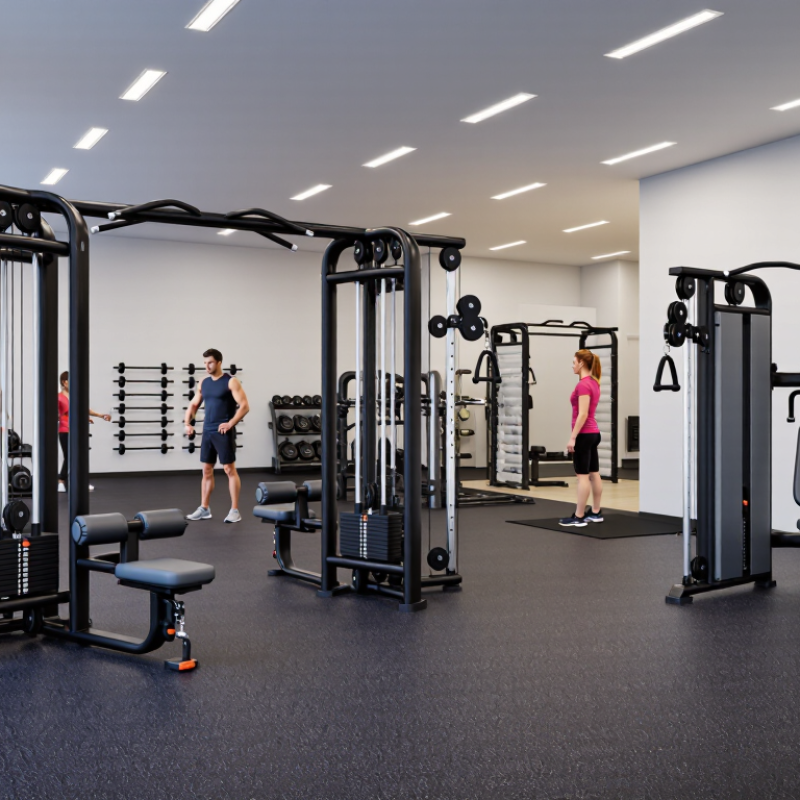
Commercial functional trainers are cable-based strength machines designed for frequent use in gyms, studios, and training facilities. They usually include two adjustable pulleys, weight stacks, and multiple attachment points. Unlike fixed-path machines, their handles can move independently. This design supports natural movement patterns and adjustable resistance. Trainers use them for pressing, pulling, squatting, rowing, rotation, and controlled rehabilitation exercises. A member can also train one side at a time. That matters when strength is uneven.
Their primary use is versatile, supervised strength training across different fitness levels. A coach may set a light load for shoulder control, then increase resistance for athletic power. Cable height changes the exercise angle and target muscles. Commercial models should tolerate repeated daily sessions, quick adjustments, and varied user heights. Look for smooth pulleys, clear weight markings, stable frames, and accessible safety features. Equipment records and scheduled inspections improve reliability. In practice, a machine is only as useful as its setup.
Tips: Test the trainer with slow pulls and fast changes. Listen for grinding, cable slack, or uneven resistance. Check whether the lowest pulley suits seated movements. Measure the training area, including handle travel and walking space. Ask staff to demonstrate maintenance access and emergency procedures. My early mistake was choosing a compact unit without checking cable range. It fit the room, but taller users felt restricted. That oversight changed how I assess commercial equipment. Also consider user flow; crowded attachments can create delays and careless movement.
Choosing a commercial functional trainer starts with its training features, not its appearance. Examine the pulley system, cable travel, weight stack, and frame stability. Smooth movement should remain consistent from the first repetition to the last. Test it in person. A rough cable path can distract users and increase maintenance demands.
Adjustability determines how many people can train safely on one unit. Check whether pulley heights change quickly and lock securely. A wide adjustment range supports presses, rows, cable rotations, and low-position exercises. Handles should feel comfortable during repeated use. If adjustments require excessive force, busy facilities may avoid them. That matters.
Exercise versatility depends on practical design, not a long accessory list. Look for pull-up options, adjustable pulleys, storage points, and attachment compatibility. The frame should allow users to move freely without striking posts or nearby equipment. Consider different body heights, training goals, and skill levels. Experienced coaches often test the machine with slow control, explosive movements, and unilateral exercises before purchase. This reveals balance issues that specifications may hide.
Do not judge quality by weight alone. A heavier frame may feel stable, yet poor cable alignment can still reduce usability. I would also measure the installation area, ceiling height, and user traffic patterns. This step is easy to overlook. A trainer that works well in a showroom may feel cramped during peak hours. Record adjustment times and observe whether new users understand the controls without constant instruction.
Construction quality should be judged beyond a polished frame. Inspect welds, cable paths, pulley housings, and adjustment points closely. A stable trainer should resist movement when both handles are pulled quickly. Thick steel helps, but poor alignment can still create uneven cable tension. Check whether the weight stacks move smoothly without rattling or sudden stops. One detail I used to overlook was the finish inside adjustment holes. Rough edges can damage pins over time.
Safety systems deserve practical testing, not just a checklist. Look for secure locking pins, clearly marked height settings, guarded weight stacks, and cables with protective coatings. Handles should remain controlled when released, especially during fast exercises. Some models include safety straps or independent pulley locks, which can reduce risk during heavy training. Test every adjustment with empty hands first. A complicated system may be technically safe but difficult for new users to operate correctly.
User capacity affects both revenue and daily workflow. Compare the number of independent training stations with the expected peak attendance. A dual-pulley unit may serve two people, but only if its frame remains stable under simultaneous use. Measure the available floor space, including movement around the machine. Crowded layouts create avoidable contact hazards. Also check the stated maximum user weight and resistance range against real training needs. Numbers can look impressive. They may not reflect long-term commercial use. I would record noise, cable smoothness, and adjustment speed during a busy trial, because small weaknesses become obvious then.
Space planning should begin with movement, not the equipment footprint alone. Measure ceiling height, training zones, access paths, and emergency exits. A practical layout should leave enough room for cable travel, user movement, and safe supervision. NFPA 101 emphasizes clear, accessible exit routes, while OSHA 1910.22 requires walking-working surfaces to remain clean, orderly, and dry. Measure twice. Delivery mistakes are expensive.
Maintenance planning protects uptime and user confidence. The 2024 European Health & Fitness Market Report recorded 71.6 million members across Europe in 2023. High traffic increases wear on pulleys, cables, upholstery, and adjustment points. Create a weekly inspection checklist, then schedule deeper monthly checks. Record unusual noise, loose bolts, frayed cables, and damaged grips. A perfect maintenance plan rarely survives real-world use. Review it after the first month.
Tips: Confirm door widths, floor loading, and power requirements before ordering. Ask installers for anchor specifications, leveling procedures, and commissioning records. Keep spare wear parts on site when possible. The ACSM’s Health/Fitness Facility Standards and Guidelines recommends documented safety procedures and staff training. That guidance is useful, but local building rules still control. Do not assume a standard installation will fit every room. A short site survey can prevent a long repair delay.
Choosing a commercial functional trainer starts with your facility, not the product catalogue. In the SFIA 2024 Topline Report, 72.9 million Americans belonged to a health club or studio in 2023. That volume creates congestion, especially around cable stations. Measure your floor space, ceiling height, walking routes, and storage needs before comparing attachments. A compact dual-stack unit may serve personal training well, while a larger four-sided frame can support group circuits. It may also consume valuable floor space.
Budget planning should include installation, maintenance, warranties, and replacement cables. A lower purchase price can become expensive when adjustments feel rough or parts are difficult to source. Inspect pulley movement, frame welds, weight-stack guards, and handle storage in person. Ask staff to test the machine with different heights and training styles. Small details matter.
Training goals should guide the final choice. ACSM’s Worldwide Survey of Fitness Trends 2025 placed functional fitness training among the top ten global trends. For general members, choose smooth resistance changes and simple adjustments. For athletic performance, prioritize cable travel, resistance consistency, and attachment variety. For rehabilitation-focused sessions, controlled movement and clear load increments matter more than maximum weight. Do not assume more stations mean better programming. In a busy facility, complicated equipment may slow coaching and frustrate beginners. Track usage after installation, because the original forecast may be wrong.
Select the best trainer for your facility, budget, and training goals by evaluating the factors that most directly affect daily use, user experience, and long-term operating value.
The chart presents a practical 100-point evaluation model for a general commercial facility. Prioritize adjustability and training versatility for varied users, throughput for busy gyms, space efficiency for smaller facilities, and serviceability for long-term ownership.
Inspect welds, cable paths, pulley housings, and adjustment holes. Pull both handles quickly. The frame should resist movement. Check for rattling or sudden stops. I once ignored rough adjustment holes. That was a mistake.
Test locking pins, height markings, guarded weight stacks, and coated cables. Release the handles carefully. They should remain controlled. Try each adjustment with empty hands. Complicated safety systems may confuse new users.
Compare independent stations with peak attendance. A dual-pulley unit may serve two people. Stability still matters during simultaneous use. Watch the frame closely. Capacity numbers can look better than daily reality.
Measure more than the machine footprint. Include cable travel, user movement, supervision space, access paths, and emergency exits. Leave clear walking areas. Crowded layouts can cause accidental contact.
Confirm door widths, ceiling height, floor loading, and access routes. Check whether the unit can pass through corners. Measure twice. Delivery errors are expensive and surprisingly common.
Perform quick checks weekly. Inspect cables, pulleys, bolts, grips, and upholstery. Schedule deeper checks monthly. Record unusual noise and loose hardware. Real facilities need adjustments.
Record cable smoothness, adjustment speed, noise, and frame movement. Watch several users change settings. Small weaknesses appear under pressure. A quiet machine may become noisy later.
Ask for anchoring specifications, leveling procedures, power requirements, and commissioning records. Keep common wear parts nearby when possible. Follow local building rules. A standard installation may not fit every room.
Choosing Commercial Functional Trainers requires balancing versatility, durability, safety, and long-term value. These multi-purpose systems are designed for commercial gyms, fitness studios, rehabilitation centers, and performance facilities, supporting exercises such as cable movements, strength training, mobility work, and functional conditioning. When comparing options, examine the cable configuration, pulley adjustment range, attachment selection, resistance feel, and the number of exercises users can perform. A well-designed trainer should accommodate beginners, experienced athletes, and supervised group sessions while allowing efficient transitions between movements.
Construction quality is equally important. Consider the frame materials, finish, weight capacity, locking mechanisms, protective features, and overall user capacity. Also measure the available floor and ceiling space, including room for movement, storage, and safe access. Review installation requirements, cleaning procedures, cable and pulley maintenance, and the availability of replacement components. Ultimately, the best Commercial Functional Trainers should match your facility’s training goals, daily usage, available budget, space limitations, and expected lifespan, providing reliable performance without unnecessary complexity.

We use essential cookies to deliver a faster, more secure browsing experience. You can accept or decline non-essential cookies.