Choosing the right supplier requires more than comparing polished catalogs and attractive factory photos. China’s commercial fitness industry includes established exporters, specialized strength-equipment makers, cardio manufacturers, and flexible OEM partners. This guide introduces ten notable companies connected with Commercial Gym Equipment Manufacturing and explains why each may deserve attention.
The comparison considers product range, factory capability, quality-control procedures, export experience, customization, warranty support, and after-sales communication. Details such as welded frame consistency, powder-coat durability, cable smoothness, belt alignment, and load testing can reveal more than marketing language. Reliable manufacturers should also provide clear documentation, traceable materials, user manuals, and certifications relevant to the destination market. These details matter in busy gyms, where treadmills may run for hours and selectorized machines may face constant daily use.
No ranking is permanently correct. Public information changes, production may vary between factories, and some companies use multiple trading or manufacturing entities. That uncertainty deserves attention. A supplier with excellent equipment may still be weak in installation guidance or replacement-part availability. Buyers should verify current factory ownership, inspect samples, request recent test reports, and speak with existing commercial customers. Site visits can help, but even a visit shows only one moment. The strongest decision combines documented evidence with practical testing and realistic communication. This overview offers a useful starting point, not a substitute for due diligence.
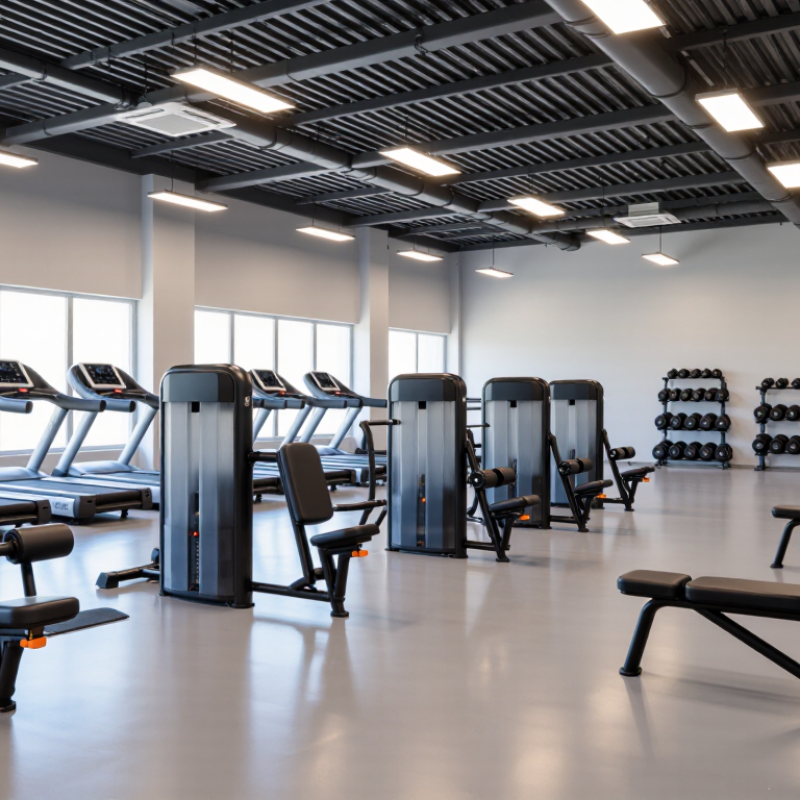
A leading commercial gym equipment manufacturer is defined by more than its catalogue. Operators need machines that withstand repeated daily use, feel stable under load, and remain serviceable years later. Check weld consistency, frame movement, cable routing, and clear maintenance instructions. Small details matter. A loose adjustment pin can disrupt a busy floor.
Safety and evidence matter too. ISO 20957 sets safety and testing requirements for stationary training equipment; buyers should ask which parts of a product range have been tested and how results are documented. The ACSM’s 2025 Worldwide Fitness Trends survey ranked traditional strength training fifth. That signals sustained interest, but a trend ranking alone cannot predict a gym’s equipment needs. Match machines to members, available space, and expected usage.
Service capacity separates a capable supplier from a dependable long-term partner. The 2024 IHRSA Global Report recorded 72.9 million U.S. fitness-club members in 2023, underscoring the scale of commercial demand. For Chinese manufacturers, export experience should include clear spare-parts lists, realistic delivery times, and support across time zones. Ask for load-testing records and references from comparable facilities. No factory is flawless. A credible one can explain its limitations, show how it handles defects, and improve after feedback.
China’s top 10 commercial gym equipment manufacturers at a glance reveal a broad production base. These companies commonly supply treadmills, ellipticals, strength machines, racks, benches, and indoor cycles. Their factories often combine robotic welding with manual inspection. That mix matters. A polished frame can still hide poor cable alignment.
Industry data gives useful context. Grand View Research valued the global fitness equipment market at about USD 13.9 billion in 2023. It also projects continued growth through 2030. Mordor Intelligence similarly identifies commercial demand, connected training, and replacement cycles as key market drivers.
These reports do not rank individual Chinese manufacturers, however. Rankings change with export volume, certifications, product depth, and after-sales performance.
Procurement teams should compare the ten candidates through measurable details. Check load ratings, noise levels, warranty terms, spare-part availability, and delivery records.
Request test reports for motors, welds, belts, and upholstery. Visit a working factory when possible. A catalog is not evidence. The International Organization for Standardization also emphasizes documented quality systems, but certification alone cannot prove long-term reliability.
This is where many comparisons become imperfect. Price may look attractive, while installation support remains unclear. Buyers should record real user feedback from busy facilities, especially on cable wear, console failures, and frame stability. Small details matter.
China’s leading gym equipment sector includes manufacturers with distinct strengths rather than identical product lines. One established producer focuses on power racks, benches, and lifting platforms, using thick steel tubing and tested welds. Another specializes in treadmills, ellipticals, and bikes, with quiet motors and reinforced belts for busy facilities. A third builds selectorized machines with clear adjustment points and protective weight stacks. Its designs suit commercial gyms, although some models need smoother cable travel.
A plate-loaded equipment maker emphasizes heavy frames, angled pressing arms, and replaceable contact pads. A free-weight manufacturer supplies dumbbells, barbells, and storage systems, with accurate weight markings and durable coatings. Another company develops cable stations and functional trainers for small training zones. Its modular layouts save floor space. A home-fitness producer creates folding treadmills and compact benches, but long-term durability deserves careful checking. One specialist serves rehabilitation centers with low-step machines, supportive handles, and controlled resistance.
The remaining manufacturers show broader technical ambition. One produces rubber flooring, lifting platforms, and impact-resistant accessories for safer training areas. Another integrates consoles, sensor tracking, and equipment management software into cardio machines. The most reliable suppliers usually provide factory audits, material records, load testing, and responsive spare-parts support. Certifications matter, but they do not replace practical inspection.
Buyers should test noise, frame stability, upholstery seams, and emergency-stop performance. I have seen attractive equipment fail through loose bolts or weak service planning. That is an uncomfortable lesson. A serious comparison should examine installation quality, warranty terms, replacement-part availability, and user feedback over time, not only showroom appearance.
China Top 10 Commercial Gym Equipment Manufacturers? How China’s Commercial Gym Equipment Manufacturers Compare
China’s commercial gym equipment sector is no longer judged by price alone. According to the Health & Fitness Association’s 2024 Global Report, the worldwide fitness market generated about $96.7 billion in 2023, with 184 million members across 73 markets. That scale raises buyer expectations for durability, service, and data compatibility.
A practical comparison should examine frame steel, weld consistency, cable smoothness, and warranty response. In a busy club, a selector pin may move hundreds of times daily. A treadmill deck faces repeated impact, heat, and dust. These details reveal more than a factory catalogue. ISO 20957 compliance can support safety evaluation, but certification does not prove long-term reliability. Real testing still matters.
Factory capability also differs. Some Chinese manufacturers focus on strength machines, while others specialize in cardio systems or custom commercial layouts. Buyers should request load-cycle records, spare-parts lists, production videos, and independent inspection reports. The International Trade Centre’s trade data shows China remains a major global exporter of sports and fitness equipment, yet export volume alone cannot measure product quality. That is where rankings become imperfect. A top-ten list may highlight visibility, but it may miss quieter factories with stronger after-sales support. Visiting a production line, checking powder-coat thickness, and testing several machines personally can expose weaknesses that online reviews overlook.
This chart presents a non-brand, industry-level benchmark of the capabilities commonly assessed when comparing Chinese commercial gym equipment suppliers. The index is based on observable procurement factors such as product breadth, customization, export readiness, certification coverage, and after-sales support.
Scores are normalized on a 0–100 industry benchmark scale and are intended for supplier comparison at category level rather than as claims about any individual company or brand.
Choosing a Chinese commercial gym equipment supplier requires more than comparing catalog prices. Grand View Research valued the global fitness equipment market at about USD 16.3 billion in 2022 and projects continued growth through 2030. That growth attracts capable factories, but supply quality remains uneven. Ask for factory ownership, production capacity, export history, and recent audit records. Do not accept photographs as evidence.
Test the equipment, not only the sales promise. Request samples of treadmills, racks, benches, and cable machines for your intended load. Check welds, pulley alignment, frame coating, belt tracking, noise, and emergency-stop response. ISO 20957 offers a useful reference for stationary training equipment safety and performance. Ask for test reports, calibration dates, and the exact model tested. A certificate without traceable documents is weak evidence. Compare 12-month failure data, return rates, repeat repairs, spare-part response, and average resolution time.
After-sales capability often decides the real cost. A spare-parts list should include bearings, cables, displays, belts, and fasteners. Confirm stock locations and replacement instructions. Clarify warranty exclusions, technician training, remote support, and sea-freight packaging. The Health & Fitness Association’s 2024 Global Report recorded about 184 million fitness facility members across 73 markets, raising pressure on equipment uptime. One idle treadmill can damage member trust. I would score landed cost, service response, and evidence quality separately. The process may feel overly cautious. It is still safer than choosing from a glossy brochure.
Supplier-screening guide: the ten rows below cover practical evaluation criteria, not a verified ranking of manufacturers. Confirm product-specific claims and documents directly with each supplier.
| No. | Selection factor | What to evaluate | Evidence to request | Practical decision check |
|---|---|---|---|---|
| 1 | Product range and intended use | Whether the supplier makes the required categories, such as strength machines, racks, benches, treadmills, or indoor cycles, for the intended commercial setting. | Current product catalogue, model specifications, installation requirements, and confirmation of which products are manufactured in-house. | Match the proposed models to your facility, user volume, available space, and operating conditions. |
| 2 | Safety and applicable standards | The safety requirements relevant to the equipment type and the destination market. ISO 20957 includes general and equipment-specific requirements for stationary training equipment. | Test reports or certificates showing the exact model, standard and edition, testing body, and scope. Check any destination-market requirements separately. | Do not rely on a generic certificate; verify that its scope covers the products being purchased. |
| 3 | Materials and construction | Frame design, weld quality, moving parts, upholstery, cables, bearings, and corrosion protection appropriate to the intended use. | Product drawings or specifications, material details where relevant, finish samples, and an opportunity to inspect or test representative equipment. | Compare documented specifications and physical samples rather than relying on appearance or sales descriptions alone. |
| 4 | Quality-control process | How incoming materials, production stages, assembly, functional checks, and finished goods are inspected and recorded. | Written inspection procedures, sample inspection records, defect-handling process, and details of any independent pre-shipment inspection. | Agree on inspection criteria and acceptance procedures before production begins. |
| 5 | Factory capability and capacity | Whether the supplier has the equipment, workforce, production planning, and subcontractor controls needed for the order and repeat orders. | A live or independent factory audit, production-process overview, facility details, and clarification of outsourced processes. | Verify the actual manufacturing site and capacity; a trading office alone does not establish factory capability. |
| 6 | Customization and documentation | Options such as dimensions, colors, upholstery, console language, logos, and packaging, along with the supplier’s ability to manage design changes. | Approved drawings, written specifications, change-control records, user manuals, assembly instructions, and labeling samples. | Document every agreed customization and obtain approval of final specifications before mass production. |
| 7 | Warranty and after-sales support | Warranty coverage by component, exclusions, claim process, response arrangements, and availability of technical support for the destination market. | Written warranty terms, service contact details, troubleshooting materials, and the process for handling defective parts or equipment. | Compare the written coverage and service process; warranty periods and terms vary by supplier and product. |
| 8 | Spare parts and serviceability | Identification of wear parts, parts ordering, maintenance requirements, and the supplier’s stated support for parts over time. | Parts list with model references, maintenance schedule, parts pricing or quotation process, and written availability commitments where offered. | Confirm how parts are identified, ordered, shipped, and supported after the initial purchase. |
| 9 | Commercial terms and total cost | Quoted product price, tooling or customization charges, packaging, payment terms, shipment terms, taxes or duties, and installation costs where applicable. | Itemized quotation, pro forma invoice, agreed Incoterms® rule and named place, payment schedule, and written terms for changes or cancellations. | Compare total landed and operating costs, not only the unit price; confirm responsibilities in the contract. |
| 10 | Lead time, packing, and shipment readiness | Production schedule, packaging suitable for the shipment method, shipping marks, document preparation, and coordination of inspections and dispatch. | Order-specific production plan, packaging details, packing list format, shipping-document checklist, and agreed inspection and dispatch milestones. | Set a written schedule with milestone dates and confirm who is responsible for each shipment and customs document. |
Reliable manufacturers build stable machines for repeated daily use. Check welds, frame movement, cable routing, and maintenance access. Catalog size is not enough.
Ask for testing records, safety documents, and applicable stationary-equipment compliance evidence. Confirm which models were tested. Certificates alone cannot replace inspection.
Test frame stability, upholstery seams, adjustment pins, bolts, and emergency-stop functions. Listen for unusual noise. Loose hardware is an early warning.
Busy gyms need spare parts, realistic delivery times, and support across time zones. Request parts lists and written warranty terms. Delays can stop a training area.
Strength machines, cardio units, cable stations, free weights, and rehabilitation equipment serve different users. Match equipment with member needs, floor space, and expected usage.
No. A trend survey may show strong interest in traditional strength training. It cannot predict your facility’s exact needs. Local member behavior matters more.
Review factory audits, material records, load-testing results, installation quality, and references from similar facilities. Compare actual service performance, not showroom appearance.
A credible supplier can explain model limitations, known defects, and repair procedures. No factory is flawless. Honest answers deserve closer attention.
Yes. Modular cable stations and functional trainers can save floor space. Measure walking paths, storage needs, and access around every machine.
Attractive equipment may still fail through weak service planning or loose bolts. Inspect carefully. I may overlook something, so test equipment personally.
This article explores what sets a leading Chinese commercial gym equipment manufacturer apart, including product quality, engineering capabilities, production capacity, customization options, and after-sales support. It offers an at-a-glance overview of ten notable manufacturers, followed by profiles that examine their product ranges, areas of expertise, and suitability for different types of fitness facilities.
The article also compares how manufacturers differ in equipment selection, service, and supply capabilities, helping readers understand the strengths and trade-offs of each option. For buyers evaluating suppliers, it highlights practical factors such as durability, certifications, communication, lead times, pricing, and warranty terms. Together, these insights provide a useful starting point for navigating China’s Commercial Gym Equipment Manufacturing sector and choosing a supplier aligned with a facility’s needs and budget.

We use essential cookies to deliver a faster, more secure browsing experience. You can accept or decline non-essential cookies.