Commercial Strength Equipment Catalog
Engineered for high-volume commercial health clubs, sports performance labs, and institutional facilities worldwide.
Executive Whitepaper: Structural Engineering & Procurement Standards for Commercial Half Racks
In modern commercial fitness facility architecture, the half rack serves as the foundational anchor of free-weight and athletic conditioning zones. As commercial health clubs, collegiate strength rooms, and sports performance centers demand higher structural versatility within optimized floor prints, specifying the right CE Certified Commercial Half Rack becomes a critical engineering and financial decision.
This technical whitepaper examines the biomechanical parameters, metallurgical requirements, manufacturing processes, and global compliance frameworks (specifically EN 957-1, EN 957-2, and EN 957-4) essential for commercial equipment buyers, procurement managers, and fitness facility owners when sourcing heavy-duty strength equipment for international distribution.
Metallurgical Rigor & EN 957 Safety Standard Compliance
Commercial gym strength infrastructure operates under high frequency, high impact, and variable dynamic loading. Unlike residential or light-commercial equipment constructed from standard thin-walled tubing, a commercial-grade half rack built for heavy institutional deployment relies on precise structural steel chemistry and certified manufacturing processes.
1. High-Tensile Structural Steel Tubing (Q235B vs. Q355 Grade)
The core uprights of a certified commercial half rack utilize hot-rolled structural steel tubing with wall thickness ranging from 3.0mm (11-gauge) to 4.5mm (7-gauge). Standard structural steel profiles feature 75mm x 75mm (3" x 3") or 50mm x 100mm laser-cut upright columns. Material yield strengths are verified via tensile testing to guarantee that even under maximum eccentric barbell drops onto safety arms, frame deflection remains within strict elastic parameters without permanent structural deformation.
2. Robotic Laser Cutting & Dual-Pass Welds
Precision execution of attachment hole spacing (typically 2-inch or 1-inch Westside spacing configurations) requires multi-axis CNC fiber laser cutting systems. Laser cutting prevents thermal warping around pin holes, ensuring seamless adjustment of J-cups and spotter arms. Frame welding employs automated robotic MAG (Metal Active Gas) welding processes with full penetration joints, completely eliminating cold weld defects common in low-tier manual manufacturing.
3. CE Certification Framework (EN 957-1 / EN 957-4 Standard Compliance)
To qualify as a verified commercial half rack exporter for EU and global markets, equipment must undergo third-party laboratory certification under the EN 957 framework:
| Compliance Metric | EN 957-1 Standard (General Safety) | EN 957-4 Standard (Strength Equipment) | Our Engineering Standard |
|---|---|---|---|
| Static Safety Factor | 1.5x Maximum Rated Load | 2.0x Maximum Dynamic Load | 2.5x Dynamic Safety Factor (1500kg+) |
| Pinch Point Clearance | > 25mm spacing at all articulation points | Fully enclosed pulley & latch mechanisms | Zero-Pinch UHMW Lined J-Cups & Spotters |
| Surface Coating Integrity | Corrosion resistant (Salt Spray Test) | Abrasion resistant powder coat | Double Electrostatic Thermosetting Powder |
| Lateral Stability Test | 10° Tilt angle deflection tolerance | Zero displacement under dynamic sway | Expanded Footprint with Gusseted Base Plates |
Evolution & Future Technology Trends in Commercial Half Racks
1. Modular Architecture & Hybrid Expansion
Traditional single-purpose power racks are giving way to high-density modular stations. Modern commercial half racks integrate dynamic add-on systems such as dual-selectorized weight stacks, lat pulldown/low row cable channels, adjustable jammer arms, and band pegs. This modularity allows facilities to deliver comprehensive compound barbell training and cable isolation within a single 2-square-meter footprint.
2. Protective Biomechanical Surfaces
Equipment wear-and-tear is a major concern for commercial gym operators. Next-generation half racks feature CNC-machined Ultra-High Molecular Weight (UHMW) polyethylene liners on all J-cups, safety spotter arms, and upright contact faces. UHMW shielding protects both the knurling of premium Olympic barbells and the powder coat of the rack, preventing surface rust and structural degradation.
3. Integration with Velocity-Based Training (VBT)
As athletic facilities transition toward data-driven strength training, commercial racks are engineered with dedicated mounting ports for linear position transducers and camera-based VBT sensors. Magnetic attachment zones and laser-etched numerical markers allow athletes to replicate precise pin settings and measure bar speed accurately across sets.
Global Supply Chain & Equipment Procurement Trends (2025–2030)
For commercial equipment distributors, fitness club chains, and institutional procurement agents, sourcing strength machinery requires a forward-looking perspective on supply chain dynamics, manufacturing transparency, and lifecycle total cost of ownership (TCO).
Direct Factory Vertical Integration vs. OEM Sourcing
Procurement teams are shifting away from intermediate trading agents in favor of direct-from-factory partnerships. Direct manufacturing facilities—incorporating in-house engineering design, robotic fabrication, electro-coating lines, and rigorous quality control—provide buyers with three major strategic advantages:
- Strict Quality Verification: Full traceability of raw steel mill certificates, weld inspection reports, and salt-spray corrosion testing.
- Customization Capabilities (OEM/ODM): Tailored upright height options, custom laser-cut logo plates, bespoke powder-coat color schemes matching club branding, and custom pin spacing.
- Optimized Logistics & Knock-Down Packaging: Flat-pack modular packaging engineered to maximize shipping container volumetric efficiency while reducing transit damage risks.
Enterprise Advantage & Manufacturing Excellence
Leveraging decades of Canadian-engineered design standards and international manufacturing precision, our production ecosystem delivers over 250 heavy-duty strength equipment SKUs to commercial facilities in more than 65 countries worldwide.
In-House Production Power
Our vertically integrated manufacturing facility features heavy-duty CNC fiber lasers, automated welding robotics, automated assembly lines, and rigorous quality inspection protocols. From raw Q235B/Q355 structural steel to final container loading, every step is rigorously monitored.
Extensive Product Portfolio
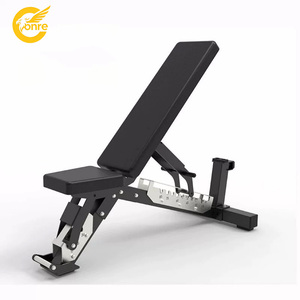
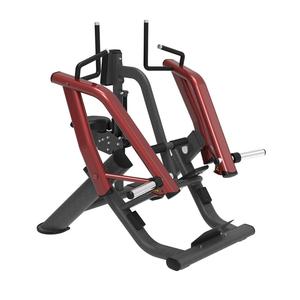
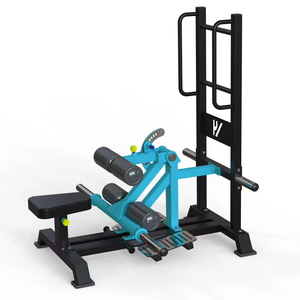
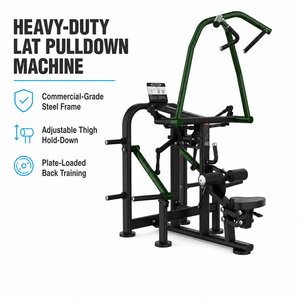
Offering one of the most comprehensive commercial strength portfolios in the industry, spanning selectorized strength machines, plate-loaded strength stations, half racks, power cages, multi-station functional trainers, and heavy-duty adjustable weight benches.
Global Dealer & Distributor Network
Supported by a established network of over 45 authorized regional distributors and direct global shipping services, ensuring seamless equipment delivery, spare parts availability, and after-sales service across North America, Europe, Asia, and the Middle East.