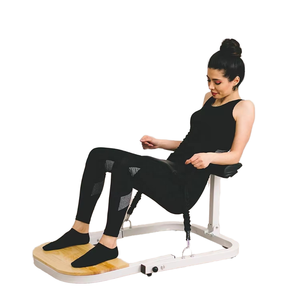
Direct Factory Catalog
Commercial Strength & Smith Machine Series
Heavy-duty engineered selectorized, plate-loaded, and multi-functional Smith systems built for maximum high-traffic facility durability.
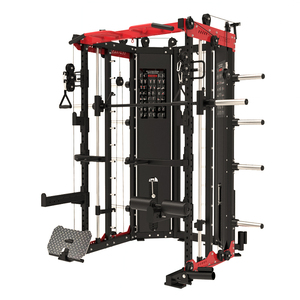
Commercial Gym Machine Multi Functional Trainer Smith Free Weight
Send an Inquiry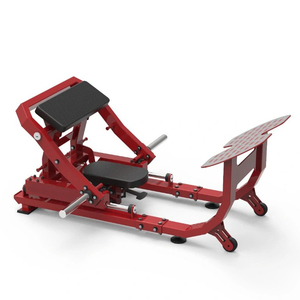
Commercial Steel Plate Loaded Glute Drive Bridge Hip Thrust Exercise Machine Workout Strength Hip Lift Fitness Equipment Gym Use
Send an Inquiry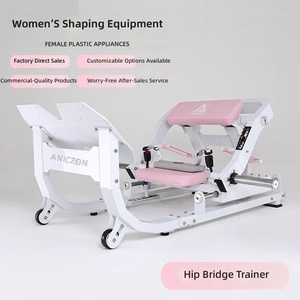
Women's Commercial Glute Bridge Hip Thrust Leg Abduction Machine-Foldable No
Send an Inquiry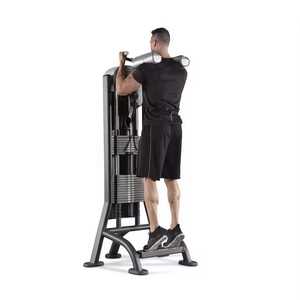
High Quality Commercial Standing Calf Machine Adjustable Gym Equipment For Bodybuilding Strength Training Steel Direct Factory
Send an Inquiry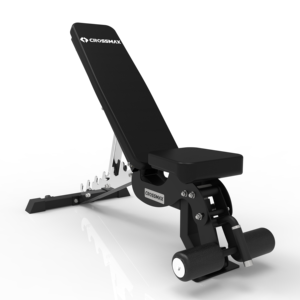
Crossmax Adjustable Bench | Heavy - Duty Gym Bench for Home & Commercial Use
Send an Inquiry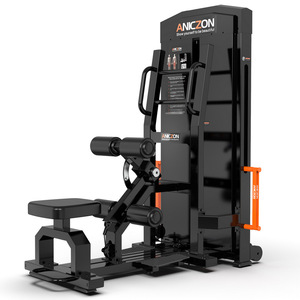
Commercial Steel Hip Thrust Machine F224 Glute Sculpting And Booty-Lifting Fitness Equipment
Send an Inquiry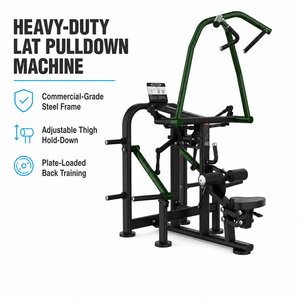
A704 Model Seated Low Row Machine Heavy Duty Commercial Gym Strength Equipment
Send an Inquiry
Industry White Paper
Engineering Standards & Manufacturing Benchmarks for Commercial Smith Machines
In modern commercial fitness facility procurement, selecting the right Smith Machine manufacturer is no longer just about raw steel weight—it is an intricate calculation of biomechanical movement fidelity, structural metallurgy, duty-cycle durability, and risk mitigation against mechanical failure. As gym operators, athletic directors, and commercial distributors scale their equipment footprints, understanding the engineering mechanics behind high-performance Smith machines and multi-functional trainers is essential for long-term Return on Investment (ROI).
1. The Evolution of Smith Machine Biomechanics: 90° Vertical vs. 7° Ergonomic Incline
Legacy Smith machines operated strictly on a 90-degree perpendicular plane. Modern sports science and athletic training data have proven that human compound movements—such as bench presses, overhead shoulder presses, and squats—do not move in a straight vertical line. Instead, natural joint paths follow a subtle arc.
Leading commercial manufacturers, pioneered by engineering philosophies like those at Atlantis Strength, integrate a 7-degree bio-angle trajectory into their commercial Smith frames. This structural tilt aligns the bar path with the natural movement plane of the glenohumeral joint and lumbar spine, reducing sheer stress on rotator cuffs during heavy incline pressing and lowering shear force on the knee cap during deep squats.
2. Linear Bearings vs. Self-Lubricating Bushings: Operational Smoothness & TCO
A critical technical evaluation point for B2B procurement managers lies in the bar-glide mechanism. Lower-tier commercial machines utilize basic bronze or nylon bushings, which create friction under heavy asymmetrical loads (e.g., when a user presses off-center). Over time, bronze bushings score the guide rods, leading to sticking points and high maintenance overhead.
Tier-1 commercial factories utilize industrial-grade linear ball bearings encased in hardened steel housings running along solid, micro-polished chrome-plated steel guide shafts (minimum 25mm to 30mm diameter). Linear bearings ensure zero stick-slip effect, silent movement, and a constant coefficient of friction regardless of whether the bar is loaded with 50 kg or 400 kg.
| Technical Parameter | Standard Commercial Grade | Heavy-Duty Enterprise Grade (Atlantis Standard) |
|---|---|---|
| Frame Tubing | 2.0mm - 2.5mm (13-12 Gauge) Steel | 3.0mm (11-Gauge) High-Tensile Structural Steel |
| Guide Shaft Spec | Hollow Chrome Tubing (20mm) | Solid Hard-Chrome Plated Cold-Rolled Shafts (28mm-30mm) |
| Bar Engagement | Manual Peg Catchers | Rotational Auto-Drop Safety Locks & Dual Catch Arms |
| Counterbalance | Fixed Uncounterbalanced Bar (20kg+) | Enclosed Cable Counterweight System (Low Takeoff Weight) |
| Powder Coating | Single-pass Electrostatic Paint | Double-Coat Electrostatic Powder Coating with Anti-Scratch Clear Coat |
3. Structural Integrity & Metallurgical Standards
Commercial gym environments subject equipment to thousands of heavy impacts daily. Premier manufacturers leverage robotically welded 11-gauge Q235/Q355 structural steel tubing, featuring laser-cut adjustment slots and CNC-bent corner radii. Vertical integration in production—such as in-house tube laser cutting, robotic seam welding, and automated powder-coating lines—ensures dimensional stability within tight tolerances (±0.2mm). This prevents frame twisting over decades of rigorous utilization.
Procurement Excellence
Core Architectural Pillars of Commercial Equipment
Why international commercial facility buyers select factory-direct engineered equipment lines.
Biomechanical Ergonomics
Precision-engineered cam profiles, variable resistance curves, and natural convergence movement paths designed to optimize muscular engagement while protecting joint structures under heavy loading cycles.
Modular Customization
Custom electrostatic frame colors, custom stitched high-density anti-microbial leather upholstery, custom laser-etched brand plates, and expandable multi-station cable attachments.
Enterprise Safety Protocols
Quad-locking safety stop mechanisms, heavy-duty safety catch arms, counter-balanced barbell assemblies, and high-tensile 900kg aircraft-grade steel cables with nylon jackets.
Strategic Horizon
Future Procurement Trends in Commercial Smith & Strength Equipment
As commercial fitness centers transition into total performance hubs, buyer behavior and equipment specifications are undergoing key shifts. Commercial gym procurement teams and equipment distributors must align their orders with these evolving market dynamics:
1. All-In-One Multi-Functional Integration
Facilities are moving away from single-purpose Smith machines toward Hybrid Functional Trainers. Combining dual weight-stack cable crossovers, half-racks, and counter-balanced Smith bars into a single footprint maximizes square-foot revenue for gym owners while serving multiple users simultaneously.
2. Specialized Glute & Biomechanical Training Stations
Driven by consumer demand for targeted lower-body conditioning, commercial facilities are heavily allocating floor space to dedicated Glute Drive Machines, Plate-Loaded Hip Thrusters, and Abduction Units alongside classic Smith machines to attract and retain members.
3. Vertical Supply Chain Accountability
B2B buyers increasingly reject unverified trading companies. Procurement policy favors verified original equipment manufacturers (OEM/ODM) like Atlantis Strength that maintain full in-house control over metal fabrication, robotic welding, ISO-certified testing, and spare parts cataloging.
4. Low Take-off Counterbalanced Systems
To accommodate users across all fitness levels—including physical therapy and rehabilitation clients—commercial buyers mandate counterweight cable systems that lower the starting barbell weight from 20kg down to a ultra-light 4kg take-off weight.
Enterprise Advantage
Engineered in Canada. Trusted Worldwide.
Built by lifters for lifters with uncompromised manufacturing standards.
Factory Direct Control
Designing and manufacturing in our dedicated Laval, Quebec, Canada facility allows total oversight over structural frame finishing, CNC machining tolerances, and welding consistency.
65+ Country Footprint
Supported by a strong international network of 45+ authorized dealers and logistics partners, guaranteeing smooth export compliance, sea freight containerization, and regional support.
250+ Commercial SKUs
From selectorized precision lines to heavy plate-loaded legs, power racks, Olympic platforms, and specialty glute training stations—furnish an entire facility from a single source.
Commercial Lifetime Structural Warranty
Every frame is backed by robust structural warranties, dedicated technical support teams, replacement parts documentation, and easy digital product registration systems.
Buyer Knowledge Base
Commercial Equipment Procurement FAQs
Clear answers to crucial questions for facility owners, procurement managers, and commercial importers.
What frame steel gauge should be specified for heavy commercial Smith machines?
For high-traffic commercial health clubs, university athletic centers, and professional sports facilities, equipment must be built using minimum 11-gauge (3.0mm nominal wall thickness) structural steel tubing. Lighter 12-gauge (2.5mm) or 14-gauge (1.8mm) steel is suitable only for light residential or boutique studio application. 11-gauge steel prevents frame flexing, maintains guide shaft alignment under loads exceeding 300kg, and provides long-term weld integrity.
How do linear bearings compare to linear bushings in commercial Smith machine maintenance?
Linear ball bearings utilize circulating hardened steel balls inside a steel housing running on solid case-hardened shafts. They offer near-zero friction and superior resistance to binding when heavy weight is lifted unevenly. Nylon or bronze bushings rely on surface friction and require frequent lubrication, which attracts dust and debris. In commercial settings, linear bearings drastically reduce long-term maintenance costs and provide a smoother user experience.
What is the advantage of a 7-degree angled bar path versus a straight 90-degree vertical bar path?
A 7-degree angle mirrors human biomechanics more accurately. During pressing exercises (bench press, incline press, overhead press), the human arm moves slightly forward as it extends. During squats, hips hinge backward. A 7-degree inclined path reduces shoulder impingement and minimizes lower back stress compared to a rigid 90-degree vertical track.
Can commercial Smith machines be customized with brand colors and logos?
Yes. Factory-direct manufacturing allows extensive OEM/ODM customization. Buyers can specify dual-coat electrostatic powder coat frame finishes (Matte Black, Gloss Silver, High-Visibility Red, Custom RAL codes), high-density upholstery colors, accent stitching, and laser-cut custom branding plates for institutional branding.
How are large commercial equipment orders packaged for international ocean freight container transport?
Commercial machinery is packed in custom steel-reinforced wooden crates or heavy-duty multi-layer corrugated boxes with high-density EVA foam corner protection. Guide rods and chrome surfaces receive anti-corrosion protective wraps. Components are organized to maximize 20ft (FCL) and 40ft High Cube (HQ) container space, minimizing ocean freight costs per unit.
What safety mechanisms are mandatory for commercial Smith machines in public gyms?
Commercial Smith machines require dual safety catch arms that can be set at variable heights along the travel path, heavy-duty rotational hooks that lock into laser-cut frame slots at close intervals (approx. 50-75mm apart), and bottom rubber bumper stops to absorb energy in case of a dropped bar.
What is the standard lead time for factory-direct commercial strength equipment production?
Standard factory production lead time ranges between 30 to 45 business days depending on order size, custom frame finishing, and cable assembly requirements. Sea transit time varies by destination port (typically 15 to 35 days internationally).
Equip Your Gym Floor with Commercial Greatness
Contact our engineering and sales specialists for direct factory quotes, custom facility 3D layouts, and bulk distributor pricing.