Featured Commercial Strength & Fitness Portfolio
Engineered for high-traffic fitness facilities, universities, and commercial health clubs worldwide.
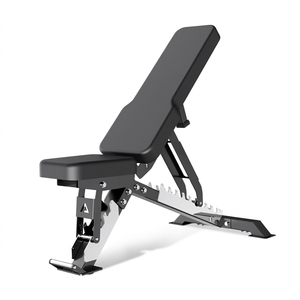
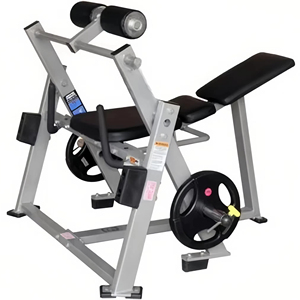
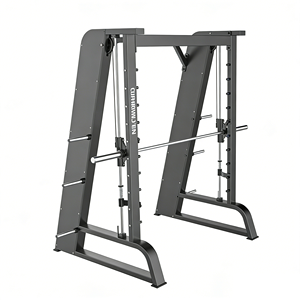
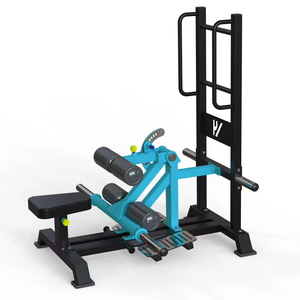
Global Manufacturing Reach & Footprint
Quantifiable performance metrics across international B2B fitness procurement projects.
B2B Executive Report: Engineering Commercial Treadmills & Heavy Equipment
Evaluating Structural Integrity, Continuous AC Drives, and Biomechanical Safety for Enterprise Facilities
In the highly competitive commercial fitness sector, procuring enterprise-grade cardio machinery and strength training apparatus demands rigorous technical evaluation. Facility developers, commercial health club chains, university athletic departments, and hotel developers cannot rely on superficial aesthetic marketing. Instead, modern procurement decision-makers require transparent data regarding structural metallurgical standards, continuous-duty motor ratings, shock absorption mechanics, and long-term lifecycle total cost of ownership (TCO).
1. Metallurgy & Frame Dynamics: Steel Gauge & Thermal Powder Coating
The foundational integrity of any heavy commercial treadmill or strength machine rests on its structural frame design. Commercial treadmill suppliers must utilize heavy-gauge structural steel tubing (ranging from 11-gauge to 7-gauge steel, translating to 3.0mm to 4.5mm wall thickness). Light commercial or residential treadmills frequently utilize 14-gauge or thinner metal, which exhibits structural flex, frame vibration, and premature weld fatigue under constant high-load usage.
Our manufacturing protocols employ automated robotic MIG/TIG welding processes that ensure 100% full-penetration joints. Following structural fabrication, frames undergo multi-stage surface preparation, including shot-blasting, chemical degreasing, and a dual-coat electrostatic thermosetting powder coating process. This creates an impenetrable barrier against sweat corrosion, high humidity, and mechanical abrasion, guaranteeing structural integrity across multi-year commercial operation cycles.
2. Continuous Duty AC Motors vs. Peak Horsepower Ratings
A critical area of information gain for procurement specialists is distinguishing between continuous-duty AC (Alternating Current) motors and peak-horsepower DC (Direct Current) motors. Consumer-grade treadmills advertised at "4.0 HP Peak" frequently fail in commercial environments because peak horsepower only represents maximum bursts achieved for micro-seconds before thermal overload protection engages.
| Specification Metric | Commercial Grade (Factory Standard) | Light Commercial / Semi-Pro | Residential Grade (Consumer) |
|---|---|---|---|
| Drive Motor Type | Continuous Duty Industrial AC Motor | High-Torque DC or Light AC | Standard DC Brush/Brushless Motor |
| Motor Horsepower (Continuous) | 4.0 HP - 6.0 HP Continuous Duty | 2.5 HP - 3.5 HP Continuous | 1.5 HP - 2.5 HP Peak Only |
| Steel Frame Thickness | 11-Gauge (3.0mm) to 7-Gauge Structural Steel | 12 to 14-Gauge Steel (2.0mm - 2.5mm) | 16-Gauge or Aluminum (1.5mm) |
| Max User Payload Rating | 180 kg – 220 kg (400 lbs – 485 lbs) | 135 kg – 150 kg (300 lbs – 330 lbs) | 100 kg – 120 kg (220 lbs – 265 lbs) |
| Running Belt & Deck System | 25mm Pre-lubricated Reversible Deck + Multi-ply Belt | 18mm - 20mm Standard Deck | 12mm - 15mm Single-Layer Deck |
| Operating Duty Cycle | 24/7 Continuous Non-Stop Operation | 4 - 6 Hours Daily Operating Limit | 1 - 2 Hours Daily Intermittent Use |
For high-traffic commercial environments, industrial AC motors controlled by precision Variable Frequency Drives (VFD / Inverters) provide linear torque delivery across speed spectrums (0.8 km/h up to 25 km/h). Inverters convert incoming line power to precise frequency signals, mitigating internal motor heat, reducing electrical draw, and eliminating speed drop when high-mass users impact the running deck.
3. Advanced Deck Cushioning & Dynamic Biomechanics
Cardiovascular strain and lower-limb mechanical impact represent major liability and comfort concerns for commercial facility operators. Premier treadmill engineering incorporates progressive elastomer shock-absorption arrays strategically placed beneath the deck. Unlike spring-based cushion systems that return kinetic energy back into the user's joints (creating recoil impact), elastomeric durometer blocks dissipate axial forces horizontally.
Furthermore, commercial running decks utilize multi-layer high-density phenolic resin-impregnated fiberboard. Double-sided (reversible) 25mm decks effectively double the operational service life of the machine. Combined with maintenance-free, self-lubricating conductive carbon-weave belts, friction coefficients are stabilized below 0.15, protecting internal drive electronics and reducing facility power consumption by up to 22%.
Why Top Global Brands Partner With Our Factory
Vertical integration, stringent engineering compliance, and complete B2B supply chain control.
Future Trends in Commercial Fitness Procurement
Industry Insights & Technological Evolution Shaping Commercial Cardio and Strength Flooring
1. Integration of Smart Telemetry & IoT Asset Management
The modern commercial gym floor is rapidly transitioning from standalone mechanical hardware into connected digital ecosystems. Future-ready commercial treadmills and smart strength arrays feature embedded IoT telemetry modules. These sensors track operational metrics in real-time, including motor thermal output, cumulative running belt mileage, deck friction indices, user weight distribution profiles, and vibration harmonics.
For facility procurement managers, IoT connectivity shifts equipment maintenance from reactive repair to predictive maintenance. Machine telemetry alerts maintenance teams to flip a reversible deck or adjust belt tension *before* a failure occurs, preventing expensive equipment downtime and extending capital asset life cycles by up to 35%.
2. Green Power Recovery & Self-Generating Technology
Environmental sustainability and operational cost reduction have become top priorities for corporate wellness facilities and commercial fitness chains. Next-generation curved non-motorized treadmills and eco-power motorized units utilize regenerative braking systems. Rather than expending excess kinetic energy as heat, internal generators convert user stride force into usable electrical current, feeding micro-grid power back into the facility's power infrastructure.
3. Biomechanical Personalization & Dynamic Resistance Curves
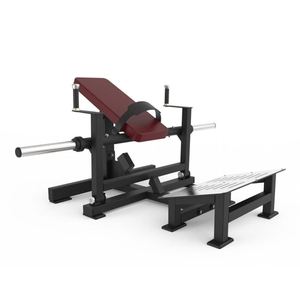
In the strength equipment sector—ranging from plate-loaded hip thrust machines to selectorized Smith machines—procurement trends show a massive demand for dynamic resistance profiles. Traditional strength equipment maintained constant mechanical leverage, often overloading joint structures at weak point angles while under-stimulating target muscles at peak contraction.
Modern commercial equipment integrates customized variable-radius cams and converging rotational axes. This ensures that peak load resistance perfectly matches human physiological force curves, maximizing muscular hypertrophy while dramatically decreasing joint shear stress—a critical requirement for elite athletic training facilities and physical rehabilitation centers.
Frequently Asked B2B Procurement Questions
Addressing commercial factory sourcing, technical compliance, and distribution logistics.
Partner With a Trusted Commercial Fitness Equipment Manufacturer
Equip your facility with Canadian-engineered commercial strength equipment, heavy-duty treadmills, and high-performance cardio suites. Request a comprehensive factory direct quotation today.
Contact Us