Precision-Engineered Strength Fleet
Heavy-duty strength equipment engineered for commercial gym chains, private boutique studios, and institutional athletic facilities across Metropolitan Seoul.
1. The Strategic Shift in Seoul’s Commercial Fitness & Strength Landscape
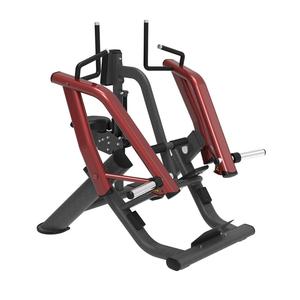
The commercial fitness sector within the Seoul Metropolitan Area (SMR)—encompassing premium districts such as Gangnam-gu, Yeouido, Mapo-gu, and Seongsu-dong—is undergoing a profound structural evolution. Modern Korean gym operators, corporate wellness directors, and commercial facility developers are pivoting away from multi-purpose entry-level resistance machines. Instead, there is an surging demand for hyper-isolated, biomechanically dedicated strength apparatuses. Chief among these specialized units is the Commercial Lateral Raise Machine.
In South Korea’s highly competitive fitness market, member retention is directly tied to machine performance, mechanical smooth-feeling, and isolation ergonomics. Bodybuilding culture, combined with the popularization of targeted hypertrophy programs among young professionals, has made lateral deltoid development ("shoulder width enhancement") a focal point of personal training regimens. Traditional dumbbell lateral raises, while classic, often suffer from momentum cheating, shoulder impingement risk at peak abduction, and inconsistent tension curves.
Consequently, fitness buyers in Seoul actively seek out OEM/ODM manufacturing partners in China capable of delivering heavy-duty lateral raise machines engineered with variable cam profiles, articulating arm pads, and anatomical axis alignment. Sourcing directly from top-tier Chinese commercial equipment manufacturers provides South Korean facility owners with an unmatched ratio of structural integrity to capital investment.
-
Targeted Muscle Hypertrophy: Continuous tension across the lateral head of the deltoid without trap compensation.
-
High Density Footprint: Micro-footprint designs optimizing high-rent per-square-meter real estate in Gangnam.
-
KC Safety Compliance: Engineered to satisfy South Korea's strict safety standards and structural load limits.
2. Biomechanical Engineering & Strength Curve Physics of Commercial Lateral Raise Machines
To deliver genuine "Information Gain" for gym procurement directors evaluating lateral raise equipment, we must dissect the biomechanical principles governing deltoid isolation. The human deltoid muscle reaches maximum lever efficiency between 60 degrees and 120 degrees of humeral abduction. Conventional free weights exert maximum torque when the arm is parallel to the floor (90°), but zero rotational torque at the bottom resting position (0°).
Our factory’s CAD-designed commercial lateral raise machines utilize custom-machined dynamic elliptical cams. These cams alter the mechanical advantage throughout the range of motion (ROM), ensuring that resistance matches the natural human strength curve:
| Biomechanical Vector | Dumbbell Lateral Raise | Standard Cable Pulley | Factory Pin-Loaded Lateral Raise | Plate-Loaded Converging Unit |
|---|---|---|---|---|
| Initial Tension (0° Abduction) | Zero Torque (0%) | Low-Medium (40%) | Optimal (75%) | High Dynamic (85%) |
| Peak Tension (90° Abduction) | Maximum (100%) | Constant (70%) | Targeted Peak (100%) | Biomechanically Matched |
| Joint Axis Alignment | Unconstrained (High Error) | Single Axis | Floating Pivot Axis | Dual-Axis Diverging |
| Trapezius Compensation | High (Cheating Common) | Moderate | Minimized via Chest Pad | Isolated Deltoid Focus |
| Frame Steel Standard | N/A | Variable | 50x100mm 11-Gauge Q235 | Heavy Commercial Grade |
The mechanical superiority of our wholesale lateral raise units stems from the alignment between the machine’s pivot point and the user's glenohumeral joint axis. Featuring counterbalanced movement arms, custom Japanese-imported NSK sealed bearings, and high-tensile aircraft-grade cables (rated to 2,500 lbs capacity), these units eliminate friction drag, delivering a fluid, continuous resistance movement essential for elite strength facilities.
3. Localized Application Scenarios in Seoul Commercial Fitness Hubs
Understanding how strength machines operate inside real-world Korean facilities allows us to customize manufacturing specifications according to venue requirements across Seoul's distinct business districts:
4. Enterprise Manufacturing Standards & Global OEM Sourcing Competence
Building upon decades of vertical integration—combining Canadian structural design principles with China's advanced manufacturing infrastructure—our production facility operates under strict quality management protocols. Sourcing directly from our factory grants South Korean equipment distributors and commercial project managers distinct structural and commercial advantages:
-
Precision Fiber Laser Cutting: Robotic cutting systems ensure frame tolerances within 0.1mm, ensuring flawless assembly and zero axis wobble.
-
Automated Robotic Welding: Continuous 360-degree seamless welds provide structural integrity capable of enduring lifetime static loads over 500kg.
-
Dual Electrostatic Powder Coating: Multi-stage sandblasting, zinc anti-corrosion base primer, and thermosetting powder topcoat resist sweat and humidity.
-
Custom OEM/ODM Branding: Laser-etched stainless steel logo plates, custom frame color matching (RAL color system), and private-label packaging for Korean wholesalers.
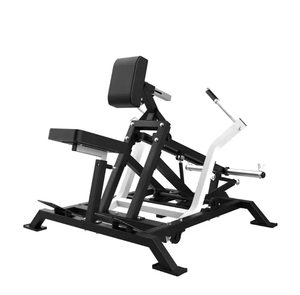
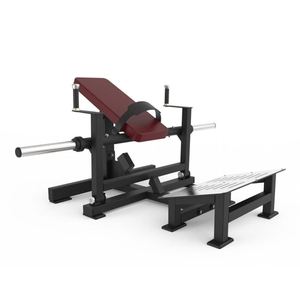
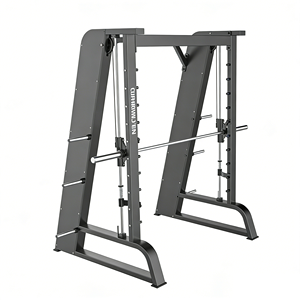
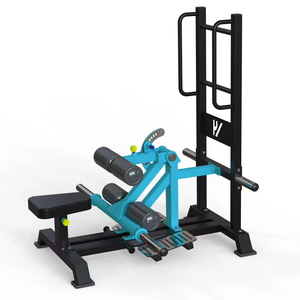
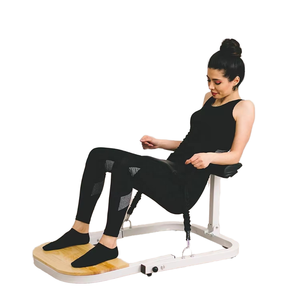
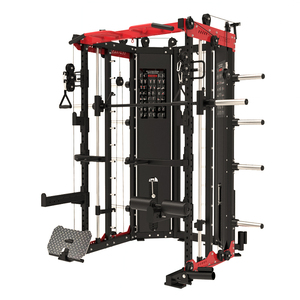
Every lateral raise machine, hip thrust trainer, seated row, and functional Smith system undergoes a rigorous 100,000-cycle dynamic load test prior to ocean freight container loading, guaranteeing total reliability upon arrival at Incheon Port or Busan Port.